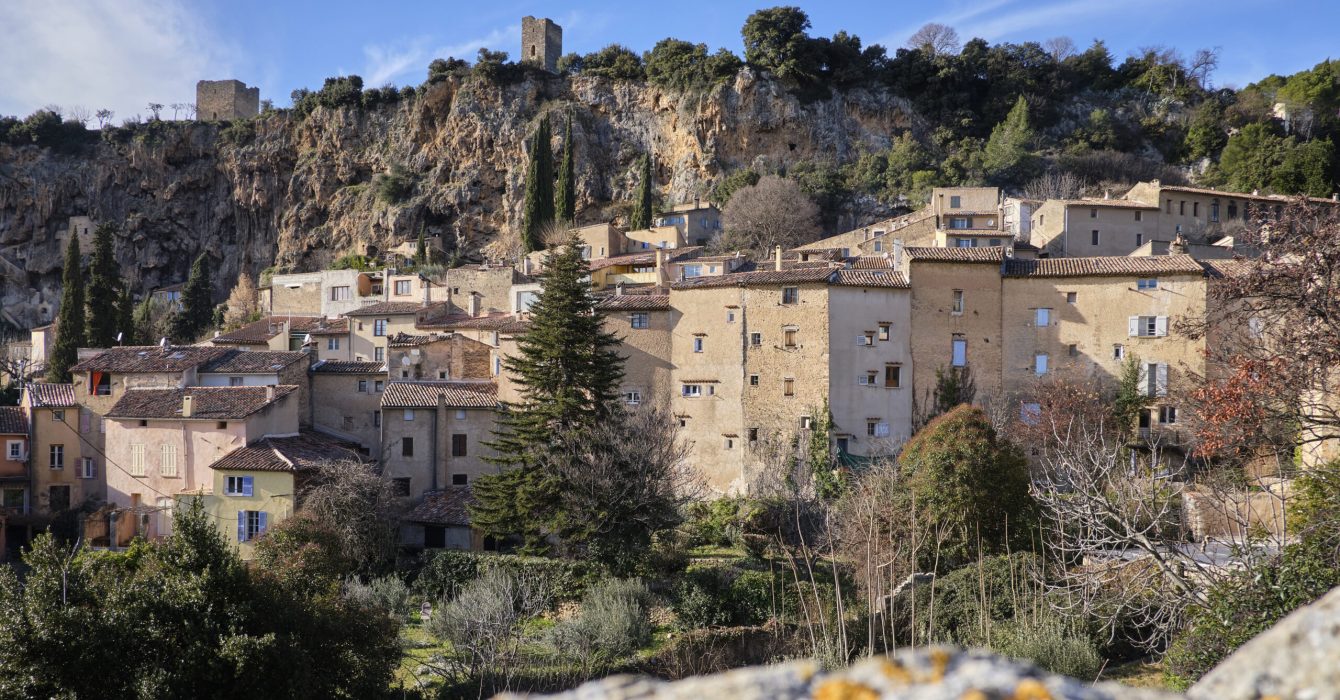
Determined to uncover why this remote community draws celebrities and pilgrims every year, Anna Evdokimou spends a weekend in the French countryside.
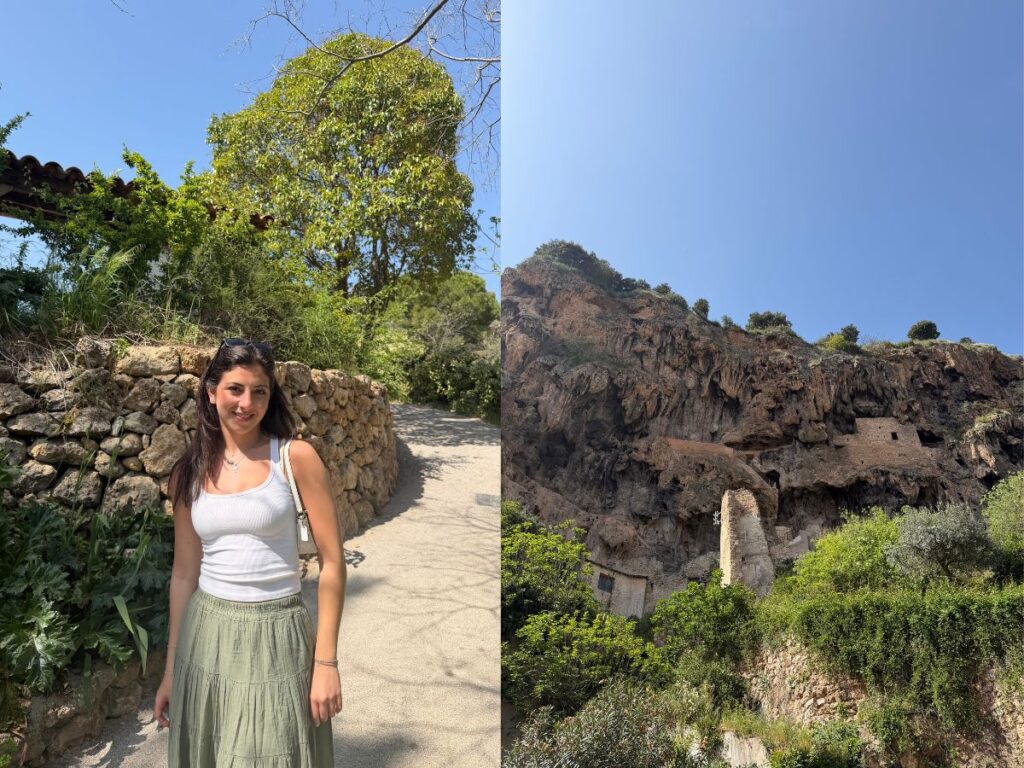
John Michael halts abruptly on the limestone cliff. Looking into the sweltering distance, he points to an ivory building, partially hidden amid swaying trees.
Pausing to take a drink, he recounts the story of King Louis XIII and Anne of Austria, who struggled to conceive for over 20 years.
“One night, the Virgin Mary appeared to an Augustinian friar and asked that the Queen pray to Notre-Dame de Grâces — this sanctuary here — to help her give birth to a descendant. Nine months later, Louis XIV was born.”
The hike has already led us to two other sanctuaries that are recognised as apparition sites. One of them bore witness to the Virgin Mary and baby Jesus. The other saw Saint Joseph appear to a man dying of thirst, guiding him to a boulder that had behind it a fresh spring.
“That’s why so many people see Cotignac as a sacred place,” John explains, as we continue our ascent. “There’s an ancient energy that exists.”
It’s also why I’m here, cautiously trekking limestone cliffs in southeastern France, dangling upon the edge of a village that feels far from the reach of modernisation.
At first glance, Cotignac’s cobbled lanes and yellow-hued houses are familiar — reminiscent of other villages dotted about Provence. But I was led here by whispers of its tales of mysticism — so entrenched in the village’s history that pilgrimages take place yearly.
My own personal pilgrimage — a two-hour walking tour — is guided by an American, and John suspects my intrigue before I’m tempted to ask.
“Cotignac is very magnetic,” he explains. “People come here to visit, and they stay. Some think the cliffs have a radiating energy that draw people in, but I don’t subscribe to that. I think it’s the history.”
Whatever it is that gives this quaint community its allure, I feel determined to uncover it within my three days here — no matter how impractical my flip-flops are for the pursuit.
Read more: “This is proper sauna”: Inside the UK’s largest beach spa
Where I stayed in Cotignac
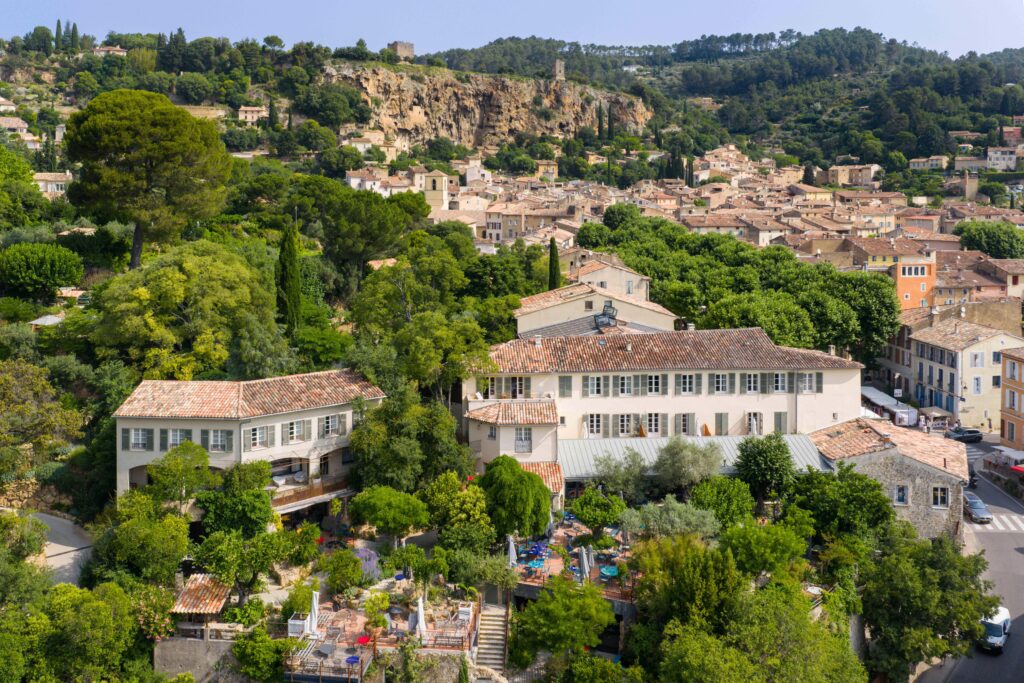
An hour-and-a-half’s drive from the airport down winding roads and through sun-drenched vineyards brings me to Lou Calen, a nature-led retreat that — I came to learn — is steeped in culture, history and fame. Originally opened in the 1970s by Huguette Caren, the hotel became a hangout for celebrities and artists — including Brigitte Bardot and singer Henri Salvador. Now, their pictures frame the reception’s walls.
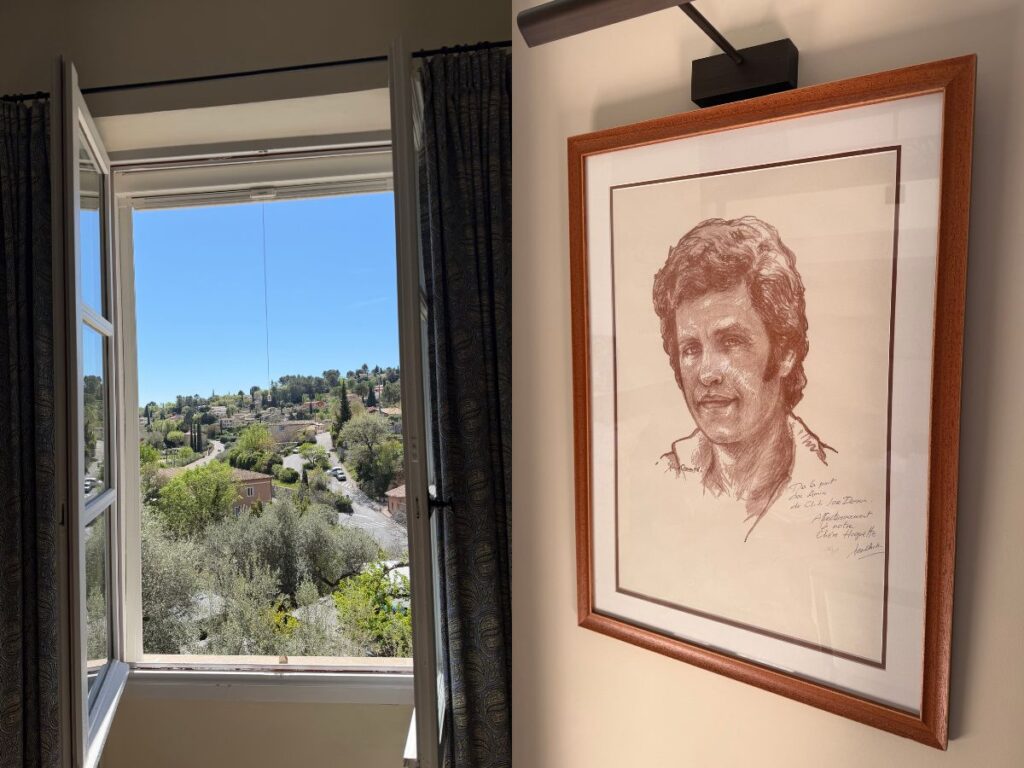
I was lucky enough to be given the Joe Dassin Room — named after the famous singer who was a regular guest at Lou Calen. There are no TVs here. In fact, there’s not a screen in sight. Just a beautiful living space, with wide windows that look out to the winding roads and rolling hills of Cotignac. A portrait of Dassin sits on one of the walls, a quote from his most famous song on the other: Elle m’a dit d’aller siffler là-haut sur la colline (‘She told me to go whistle up on the hill’).
The hotel embraces the simplicity of its surroundings while also evoking an air of exclusivity, as though I had happened upon a secret space. Whispers of celebrity visits float through the hallways just as murmurs of mysticism meander through the alleyways of the village, but it still retains an element of minimalism, refusing to take guests away from the beauty of Provence. Instead, the hotel encourages us to immerse ourselves in the region, from basket-weaving and cooking classes to wine-tastings and sound healing.
Read more: ‘I never thought I’d go to Fuerteventura — until I found out this one thing’
What I ate in Cotignac
Lou Calen is home to two distinctive dining destinations — each locally driven and celebrating the flavours of Provence.
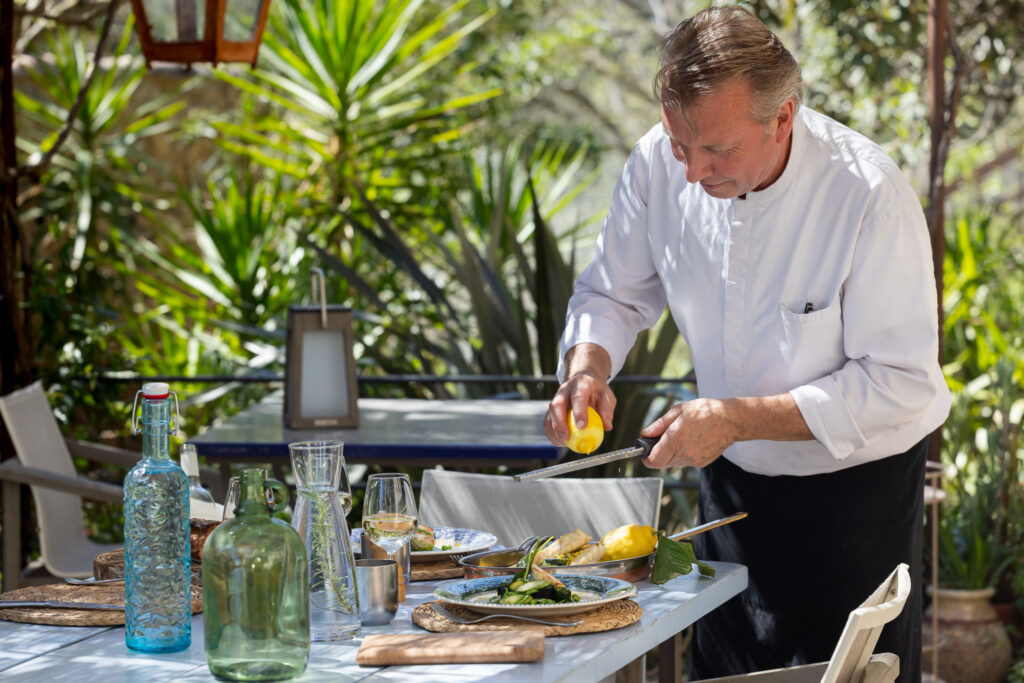
Le Jardin Secret follows a farm-to-table philosophy, with no fixed menu. It’s nestled within the greenery of the grounds, and from my spot on a terraced table I spy a chef picking flowers from the garden — used for garnishing the dishes. It felt as though we were dining in someone’s backyard, and not a restaurant listed in the Michelin Guide. But according to chef Benoît Witz, that’s the whole point.
“Every day, local producers deliver their finest ingredients,” he tells me. “I use this to create the dishes. The produce determines the menu, not me.”
He goes on to explain how the dishes are prepared à la minute to preserve nutrients and respect the ingredients. Sustainability is so valued here that Benoît makes sure to use every part of the vegetable, shaking his head at the prospect of wastage.
Back inside the main hotel building, Le Bistrot offers a more playful, relaxed menu, where wood-fired cooking takes centre stage. Locally soured ingredients are still championed, though, and my dinner here begins with octopus, followed by a flame-grilled tuna steak alongside seasonal vegetables.
Read more: Discover the Alpine retreat proving that true luxury travel is sustainable
What makes Cotignac special?
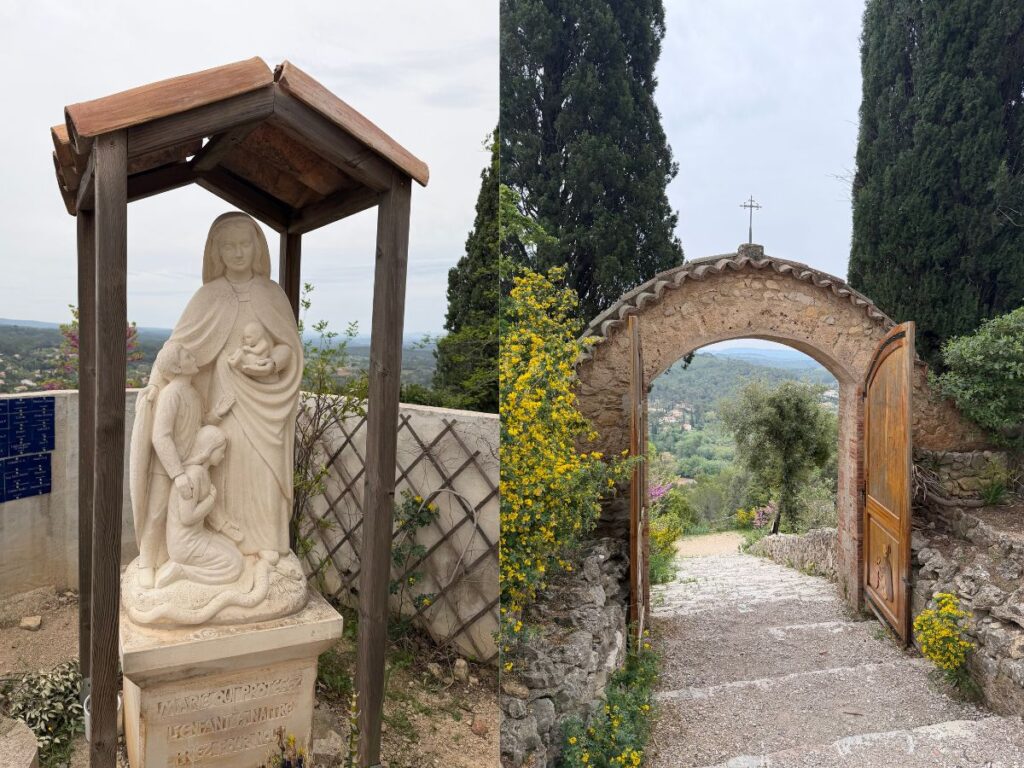
In 1660, Louis XIV visited Cotignac to pay his respects to the Virgin Mary for the gift of his life. Her sanctuary — Our Lady of Graces — is a steep climb. After two hours of walking through the forest, my flip-flops and I finally reach the entrance. The words ‘Porte du Ciel’ are carved on the wooden doors, which seems like a fitting description. The hike, coupled with the soft rustle of the wind and the endless treetop views, feels like what I imagine climbing to the Gates of Heaven might be like.
Monks filter in and out of the sanctuary without a noise. Outside, a statue of the Virgin Mary is surrounded by hundreds of names — children who were born after their parents visited here and prayed to conceive. People from across the world tackle the steep ascent to this statue, in the hope that the saint will shower her graces. For many, it seems, she does.
Religious or not, there’s no denying the magnetism of this Provencal refuge. Cotignac unfolds upon you like a dream — warm, hypnotic and familiar — a welcome break from the disruptiveness of urban life. Perhaps that’s why Hollywood stars continue to stroll its cobbled lanes, or maybe it’s because of the privacy that Lou Calen gifts to guests. John Michael said that the residents here work hard to keep it small and special, and it’s not hard to see why. The village is reserved for those who appreciate its tranquillity, a place where one can be heard whistling up on a hill.
How to do it
Cotignac is around 90 minutes’ drive from Nice Côte d’Azur Airport.
The Joe Dassin room at Lou Calen starts from €250 (£215). For more information, visit loucalen.com
Feature image: Yannick Schwartz