Living360’s acting deputy editor Evelyn Richards explores the impact of charity challenges ahead of running the Edinburgh Marathon this summer for Crohn’s & Colitis UK.
There’s an inevitable moment, usually somewhere between mile 10 and 20, when many exhausted marathon runners wonder to themselves: ‘why am I doing this?’
For a growing number of people, the answer is actually very simple. It’s not about the finish time, or even the finish line — it’s all about purpose.
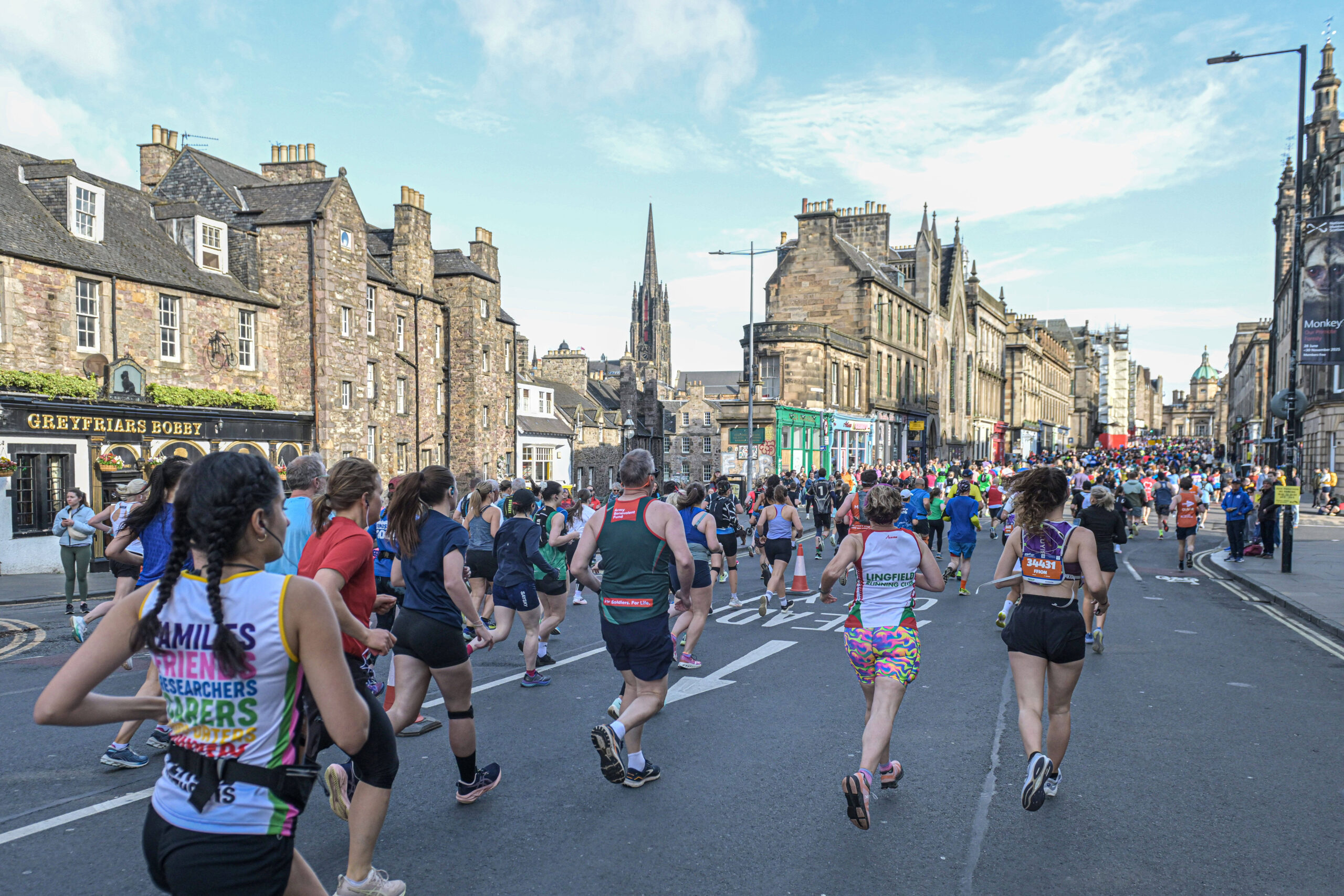
Charity challenges, from marathons to mountain treks, are becoming an increasingly popular way to fundraise. The appeal lies not just in the physical test, but in the sense that every mile, every blister and every early morning training run contributes to something bigger than the feat itself.
That sense of purpose is what led me to take on the Edinburgh Marathon on Sunday, 24 May.
Living360 is partnering with Crohn’s & Colitis UK on a six-week editorial series, exploring the realities of Crohn’s disease and ulcerative colitis — and the impact of fundraising challenges like this one.
As part of the partnership, I’ll be running the marathon in support of the charity, with a series of features published in the lead-up combining lived experience and expert insight.
The cause has become deeply personal since a family member was diagnosed with Crohn’s disease.
View this post on Instagram
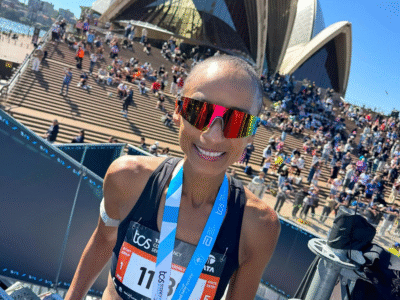
Read more: Adele Roberts on completing seven major marathons with a stoma bag: “I won’t let it change me”
According to the charity, one in every 120 people in the UK is living with Crohn’s disease or ulcerative colitis. Like many chronic conditions, it’s often invisible, but its impact is anything but — shaping everything from daily routines to long-term wellbeing.
Diagnosed with Crohn’s, Lucy Aitkins says the condition affects every aspect of her life. “I used to love to dance, but dieticians have advised me not to do any unnecessary exercise,” she explains. “I get really sad sometimes, as I don’t feel as strong as I used to.”
Despite affecting so many people, awareness remains relatively low. Fundraising isn’t only about financial support, but also visibility — ensuring that people living with these conditions feel seen and supported. As Lucy puts it: “It’s so important to find other people going through the same experiences as you, and know you’re understood.”
Read more: Does your run need a digital detox? How Strava and RunTok are ruining running
The power of visibility
It’s this combination of tangible impact and greater visibility that makes charity challenges so powerful.
Tim Todhunter, head of fundraising campaigns and events at Crohn’s & Colitis UK, explains: “The money raised helps to fund research that brings us closer to better treatments and, ultimately, the cure we’re all hoping for one day.”
The impact goes beyond funding alone though. Taking on a challenge often sparks discussions, encouraging more awareness of conditions that are frequently overlooked. As Tim adds: “These efforts don’t just raise vital funds, they also open up important conversations.”
Charity challenges create a shared experience
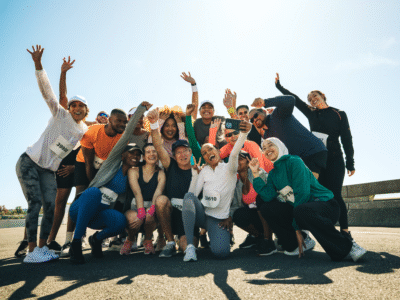
While training can be solitary, the wider experience rarely is.
Friends, family and even strangers become part of the journey, whether through sponsorship, encouragement or simply following along.
Read more: “I’m running my first marathon — why are there no training plans with menstrual cycle syncing?”
Beyond the finish line
For charities, these challenges have a unifying effect, both on those taking part and their circle of friends. They build a community of advocates — people who aren’t only financially invested, but emotionally connected. That connection often lasts well beyond the event itself, too.
As race day approaches, I keep thinking that, although the marathon will be over in a matter of hours, the work it supports will continue long after.
So, somewhere along those miles, when the question ‘why am I doing this?’ inevitably pops into my head, the answer should be clear.
If you would like to support Evelyn’s fundraising efforts for Crohn’s & Colitis UK, visit her JustGiving page.
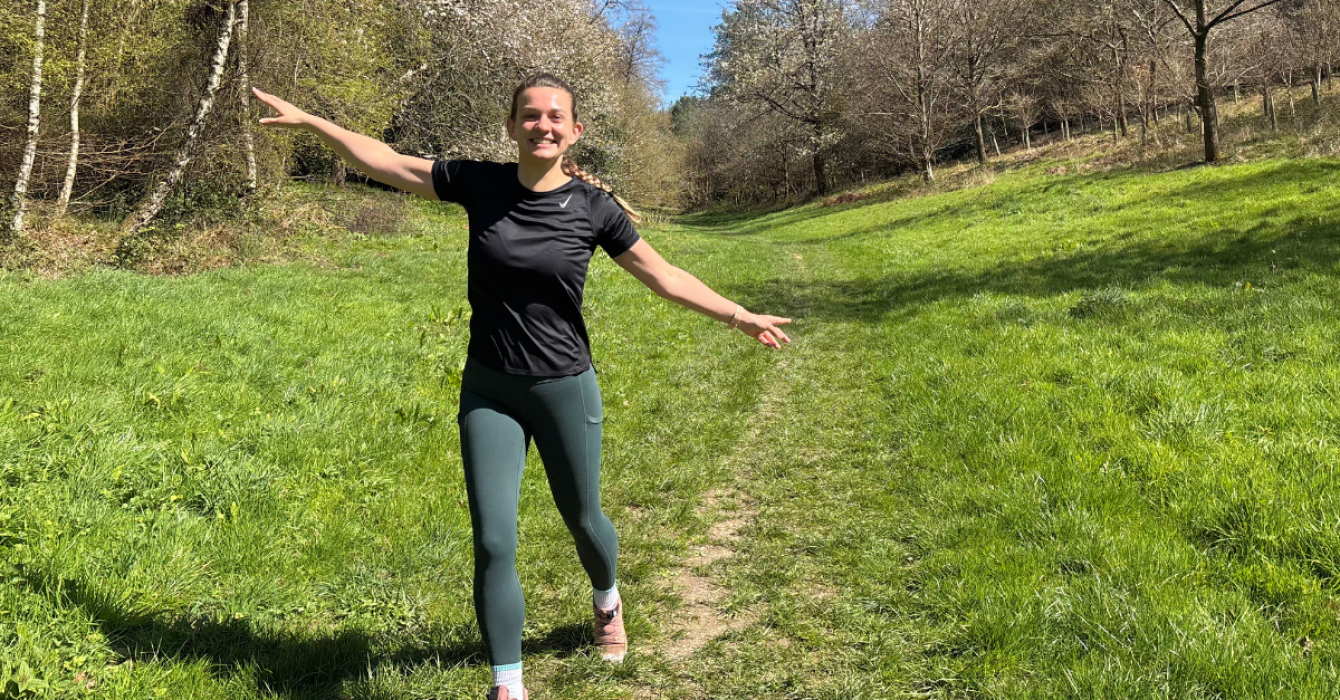
Feature image: Evelyn Richards