As Living360’s Evelyn Richards prepares to run the Edinburgh Marathon in support of Crohn’s & Colitis UK, she speaks to Adele Roberts about running with a stoma — and what it means to show up, visibly and unapologetically.
In the days after the London Marathon, the stories that linger aren’t just about finish times, but about what people carried with them across the line.
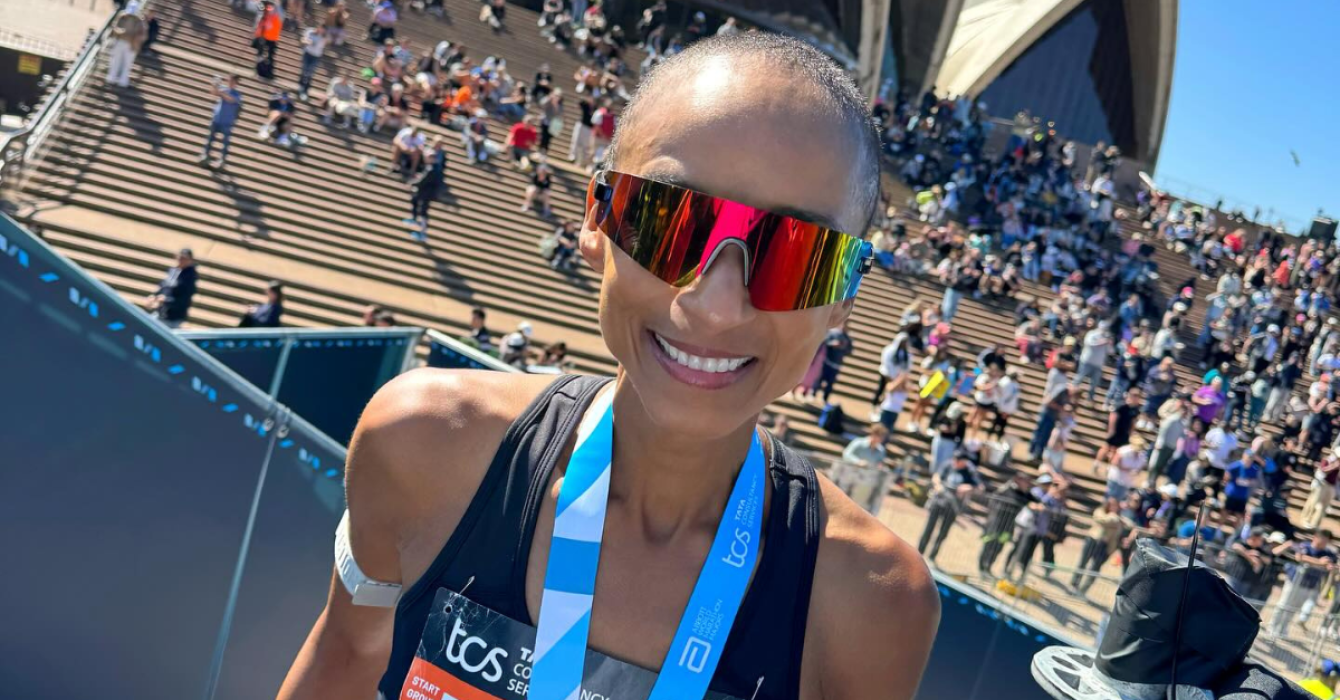
Among them was Adele Roberts, who completed the race with her stoma bag visible — a decision that was as personal as it was powerful.
Adele’s stoma is the result of bowel cancer, not Crohn’s or colitis, but the principle is the same. For many people living with inflammatory bowel disease, where stoma surgery is often part of treatment, her visibility represents something much bigger than one race.
As I train for my first marathon, it’s hard not to think about what that challenge would feel like with an added layer of complexity. Running is demanding enough. Doing it while navigating a body that has already been through trauma is something else entirely.
View this post on Instagram
Read more: Why Living360 is partnering with Crohn’s & Colitis UK for the Edinburgh Marathon 2026
“I didn’t know what one was”
For Adele, the decision to share her experience publicly came down to representation, or the lack of it.
“When I first got a stoma, I didn’t know what one was,” she says. “I’m not ashamed of having a stoma. I am ashamed I didn’t know what one was.”
That lack of awareness is something she’s determined to change. After her surgery, she quickly realised how much stigma still surrounds stomas, and how deeply that can affect people.
“There are still taboos around stomas,” she explains, and in some cases, that stigma can have serious consequences. “There are people, sadly, dying of shame. There are people that refuse stomas because they don’t want to have one.”
For Adele, that is something she finds difficult to accept. “People are worth more than worrying about what other people think of their stoma,” she says.
Instead, she has reframed her own experience entirely. “To me, having a stoma is a badge of honour.”
Making the invisible visible
That mindset is what led Adele to run the 2026 London Marathon with her stoma bag visible — something she admits made an already difficult challenge even harder.
“Usually, I run my marathons with my stoma bag secured,” she explains, describing how she normally manages it so it stays in place during long distances. Running without that security introduced a new set of challenges.
“It’s potentially going to be swinging all over the place, coming off, falling off,” she says. “It’s very tricky.”
But the decision wasn’t about comfort, it was about visibility.
“One of the things about having a stoma is that they’re not talked about enough,” she says. “There’s not enough visibility. It’s a non-visible disability.”
By choosing to show her stoma, Adele wanted to challenge that. “I want to share that message that it’s possible. Our bodies are amazing, they’re strong, they can do anything that anyone else can do.”
For Pearl Avery, IBD nursing lead at Crohn’s & Colitis UK, that visibility is exactly what makes Adele’s decision so impactful.
“I think Adele Roberts is a genuine inspiration,” she says, “not because she ran a marathon, but because she showed so clearly that a stoma does not have to come in and take over your life.”
Pearl explains that being visibly open sends a powerful message: “A stoma is something you live with, not something that defines or limits who you are.”
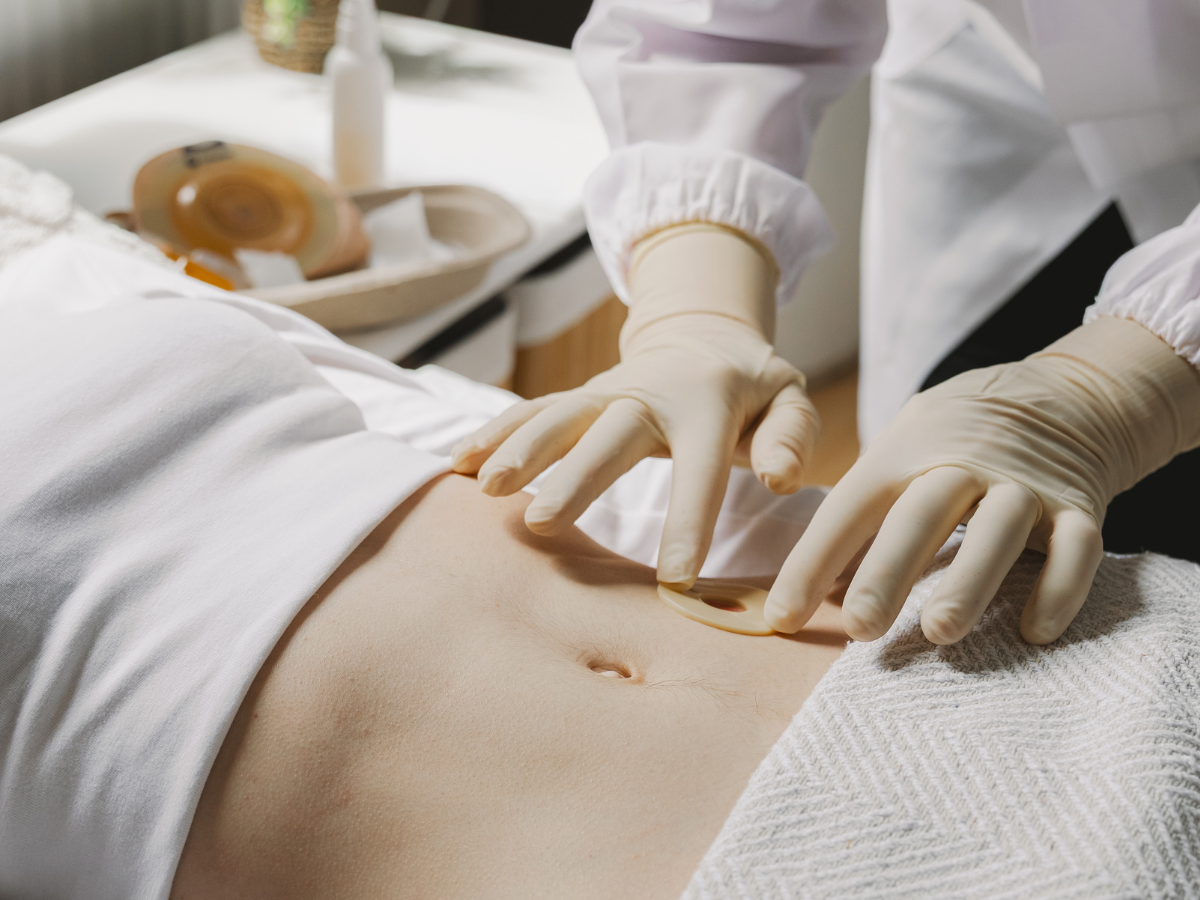
Read more: Adele Roberts on completing seven major marathons with a stoma bag: “I won’t let it change me”
Marathon training with a stoma
Marathon training always demands discipline, but for Adele, it requires constant awareness of how her body works.
Hydration is one of the biggest challenges. Because her colon is no longer connected, she explains that she is “very dehydrated all the time just by design”, meaning fuelling and hydration need careful planning.
“I just make sure that I have lots of gels on me, hydration tablets […] I lose salts quite a lot as well,” she says. It becomes, in her words, “a delicate balance” — taking on enough fuel to keep going, while managing what her body does with it.
There are practical considerations too. “I always need to know where all the toilets are at all times,” she explains, describing how she plans routes in advance and even writes toilet locations on her hand during races.
Even the physical act of running is different. A stoma, she points out, is “a piece of very sensitive tissue” — normally inside the body — now exposed to friction and movement.
For Pearl, these kinds of adaptations are part of living with Crohn’s, colitis or a stoma.
“Adaptation is normal, not failure,” she says. Training often requires “more flexibility, more listening to the body, and more acceptance that plans may need adjusting.”
Redefining strength
Perhaps the biggest shift for Adele has been how she sees her body.
“I’m in awe of Audrey,” she says, referring to her stoma. “She is incredible. She’s my superpower.”
At first, the idea of living with a stoma felt almost impossible. “How have I got a bit of my inside on the outside and I’m still alive?” she reflects. But over time, that perspective has changed.
“It’s really made me appreciate my body,” she says.
That doesn’t mean the journey has been straightforward. Adele is open about still working through her relationship with her body — something that feels familiar to many women, regardless of illness.
“I think it’s me I struggle with,” she says, which is part of the reason she chose to run the marathon so visibly. “It’s okay to be seen […] It’s not vanity, it’s self-care.”
Avery sees this shift as a crucial part of recovery. While it’s normal to feel uncertain or even to grieve after surgery, she says many people eventually find that a stoma gives them back something they had lost — “energy, predictability, confidence and choice”.
View this post on Instagram
“You don’t have to run a marathon”
Despite everything she has achieved, Adele is clear that resilience doesn’t have to look like a marathon.
“You don’t have to run a marathon,” she says. “Getting up out of that bed after you’ve had that surgery, that was probably the hardest marathon I had to do.”
Her advice to others is simple: “Be kind to yourself, give yourself time.”
Pearl echoes that sentiment. The goal, she says, is not achievement for its own sake, but quality of life.
For some people, that might mean running a marathon. For others, it might be something much quieter — travelling again, eating without anxiety, or simply feeling comfortable in their own body. “All of these are just as valid.”
If you would like to support Evelyn’s fundraising efforts for Crohn’s & Colitis UK, visit her JustGiving page.
Feature image: Adele Roberts