
Learning new skills needn’t start and end at school or work — these are the apps helping adults stay sharp, engaged and informed.
Perhaps because of growing research on dementia and Alzheimer’s or just a general increase in concerns over memory and brain health, neuroplasticity (the brain’s ability to adapt and recover throughout life) has become a hot topic on social media lately.
And while regular exposure to Instagram’s so-called neuroscience experts’ variations on ‘the five essential tips for improving brain health and memory’ can feel exhausting, the science is (mostly) solid. Continuous learning supports brain function — by promoting neuroplasticity and improving cognitive reserve — and may even help reduce the risk of Alzheimer’s and dementia.
The desire to learn is often inspired by other motivations. Take learning a new language, for example. You might decide to improve your French to avoid embarrassment when ordering food on an upcoming holiday, but in doing so you’re also stimulating your brain: enhancing memory, cognitive ability, communication skills (in a new language), creativity and mental flexibility.
Luckily, much of this schooling can be done online or on our phone. Whether you’re ready to commit to a strict brain-training routine, pick up a few extra skills or simply fill your commute productively, these are our favourite educational apps for easy, accessible learning.
View this post on Instagram
Duolingo
Many of you will be familiar with Duolingo’s fear-eliciting cartoon green bird. Some may have even allowed it to become a widget, taunting you daily via reminders and turning purple if ignored for too long. Duolingo’s combination of gamification and bite-sized lessons have made it one of the most popular language-learning apps around. Its 42 languages are taught through content and exercises designed to build reading, speaking and listening skills. It’s also completely free — paid options are available, which unlock extra features, but none are essential.
Read more: Can’t afford therapy? These are the best free and low-cost mental health apps and resources
Rosetta Stone
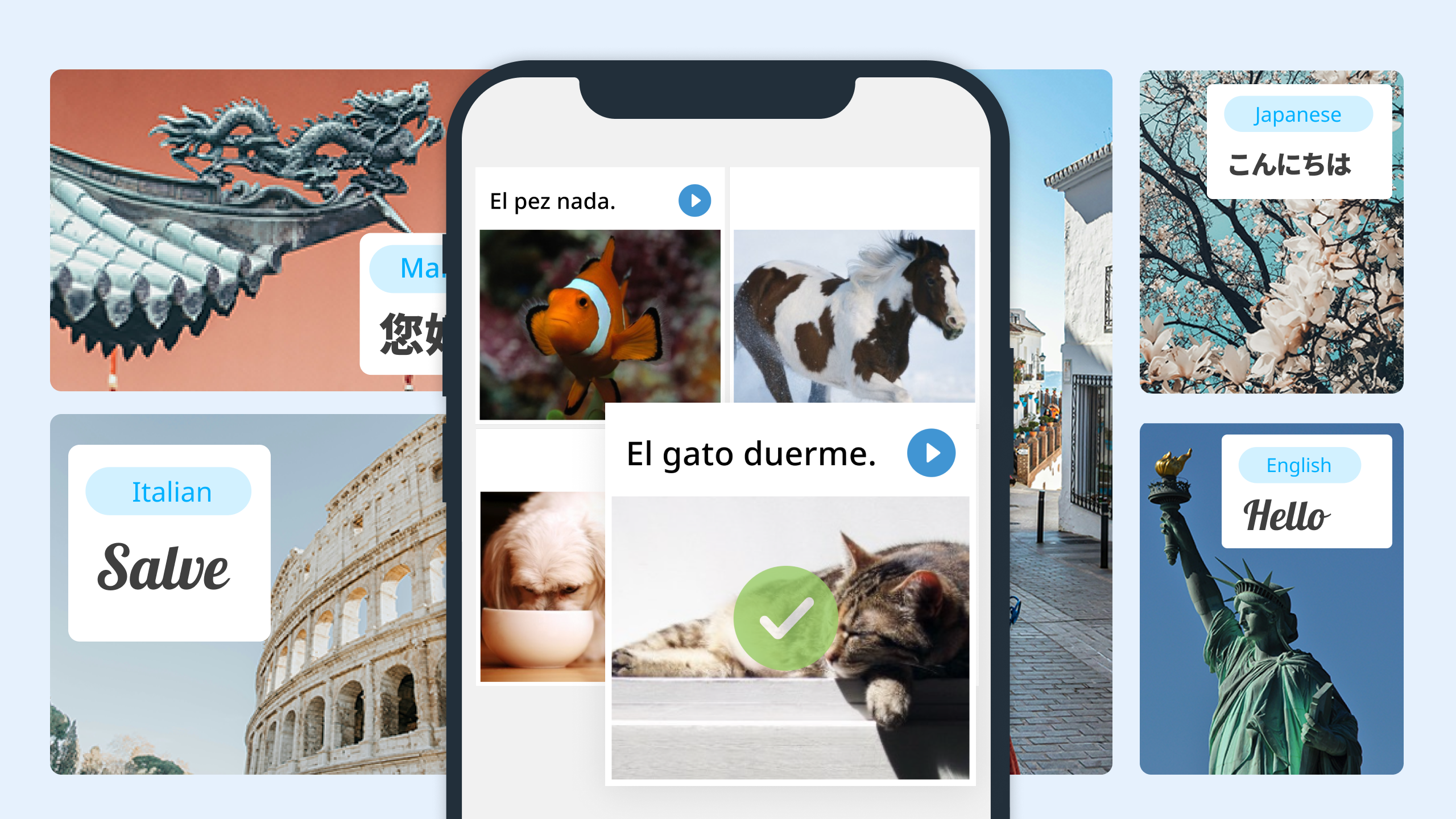
One of the longest-running language-learning platforms, Rosetta Stone has been around since 1992. While it offers 25 languages — fewer than Duolingo’s 40-odd — its immersive method teaches users to associate words with images and sounds, without relying on translations — mimicking how we first learn to speak. It’s a great starting point for beginners, but beyond that you may want to switch to another platform to keep challenging your brain as it lacks grammar explanations and depth for advanced learners.
Peak
If you’re the competitive type, Peak is your app; not only can you track your progress, but the programme continuously scores your Peak Brain Score while ranking you against other players. Similar to other brain training apps, like Lumosity, Peak also tests skills like memory, language and problem solving, but it also tests emotional response — meaning it at least feels a little more thought provoking and relevant to real life.
Read more: These are the best apps for sleep — from calming soundscapes to tracking

Preply
Preply is different from other language learning platforms in that it relies on tutors to teach users. More like a tutoring marketplace than a gamified learning app, it offers personalised learning — with an actual person — that lets you learn based on your goals and preferences. While you do have to pay, tutors set their own rates, so all you have to do is set your budget so it matches with someone appropriate. Since you can choose your own lesson times, it’s a good option if you can’t commit time every day or if you learn better by having someone keeping you accountable.
Read more: Is habit stacking the secret to achieving your wellness goals in 2026?
View this post on Instagram
Lumosity
If you’re more interested in brain training, Lumosity aims to improve cognitive function, targeting memory, attention, flexibility and problem-solving. All its 50 games draw from real cognitive science studies, challenging different cognitive skills and designed to be enjoyable, too — so you stay engaged throughout. You can also track your progress over time, adding an extra layer of motivation, and even focus on areas that need improvement.
Kahoot!
It might be used in schools all over the world as a tool to keep children engaged, but Kahoot can also be fun for adults, too. The game-based platform of interactive quizzes keeps you on your toes by testing your knowledge of trivia topics such as ancient history, geography or general knowledge. You can also create your own quizzes to use with friends, family or work colleagues, or even input sets of questions you’re trying to improve your knowledge on. And if you’re really set on learning something important, for £9 a month you can access AI-powered question generation, progress reports and extra self-study features with Kahoot!+ Gold Student.
Read more: Apple Watch Series 9 vs Garmin Vivoactive 6: which smartwatch deserves a place on your wrist?
View this post on Instagram
Elevate
Those looking for an option with a visible real-world application might choose Elevate. It’s centred around reading, writing, maths, memory and attention. The more you use it the more results you’ll notice — helped by the adaptive difficulty level that encourages you to stay engaged, challenged and learning. The app is language heavy and focuses heavily on practical application, but if you can bear with the wordy numeric problems it will certainly help improve both maths and comprehension skills over time.
Read more: Does your run need a digital detox? How Strava and RunTok are ruining running

Bright BSL
Not just beneficial as a form of communication, learning sign language has been proven to boost cognitive abilities, including multitasking, spatial awareness and visual-spatial skills. For beginners, Bright BSL app is the top choice for learning British Sign Language. Lauded as the most comprehensive British Sign Language learning experience (outside of a classroom), it offers regular quizzes, a sign bank for reference and the flexibility to learn at your own pace.
View this post on Instagram
Headway
While there’s something to be said for reading an entire book, sometimes you just need to know the gist. Headway is a microlearning app that gives users 15-minute summaries (to read or listen to) from bestselling nonfiction books, covering topics such as self-help, philosophy, history, therapy, leadership, health and business. You can also tailor a 30-day learning plan to any specific goals you have, tracking progress and streaks, with the option to gamify learning by testing yourself on what you’ve read already.
Read more: The AI conundrum: is ChatGPT good or bad for your child’s education?
View this post on Instagram
Nibble
Similarly to Headway, the Nibble app aims to distil big ideas into short, bite-sized and interactive lessons. Subjects are diverse, running from STEM and business to humanities, including history and art. Sessions typically last between two and 10 minutes — a reasonable amount of time to take in something complex without becoming overwhelmed — and daily learning reminders encourage consistency. While it’s not free, a seven-day free trial gives you ample time to figure out if it suits your learning style.
Feature image: Pexels