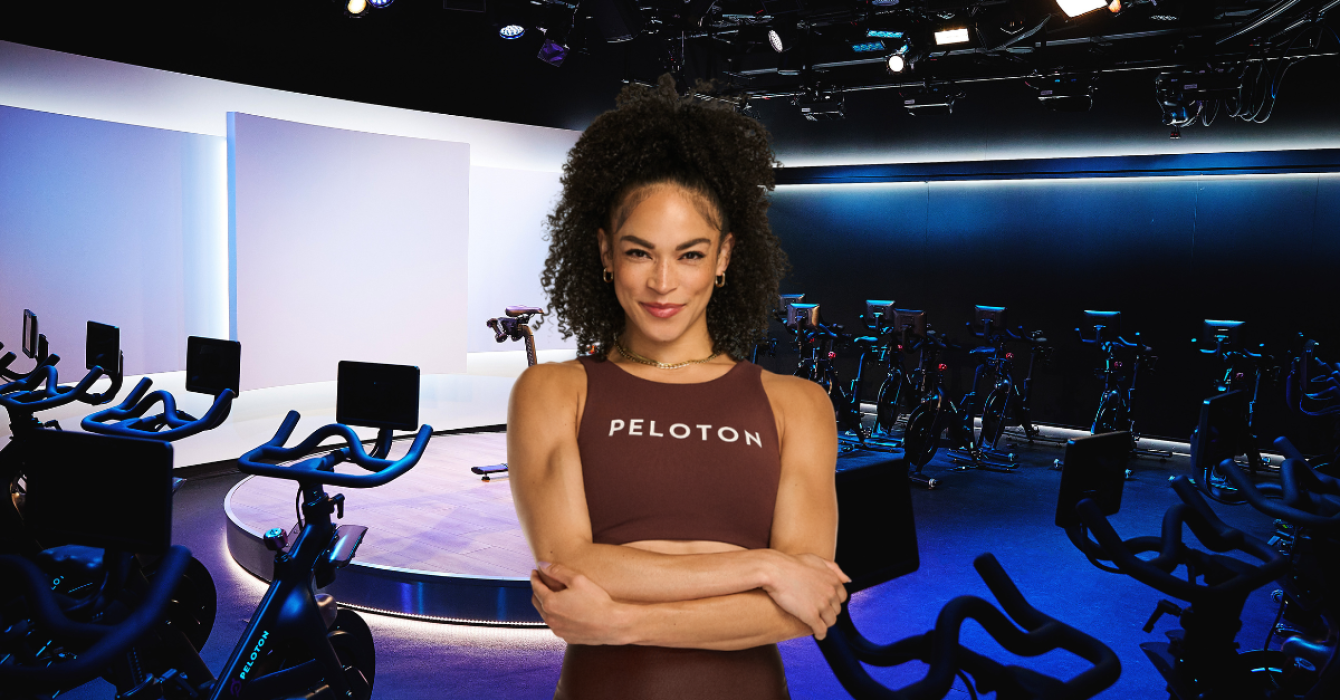
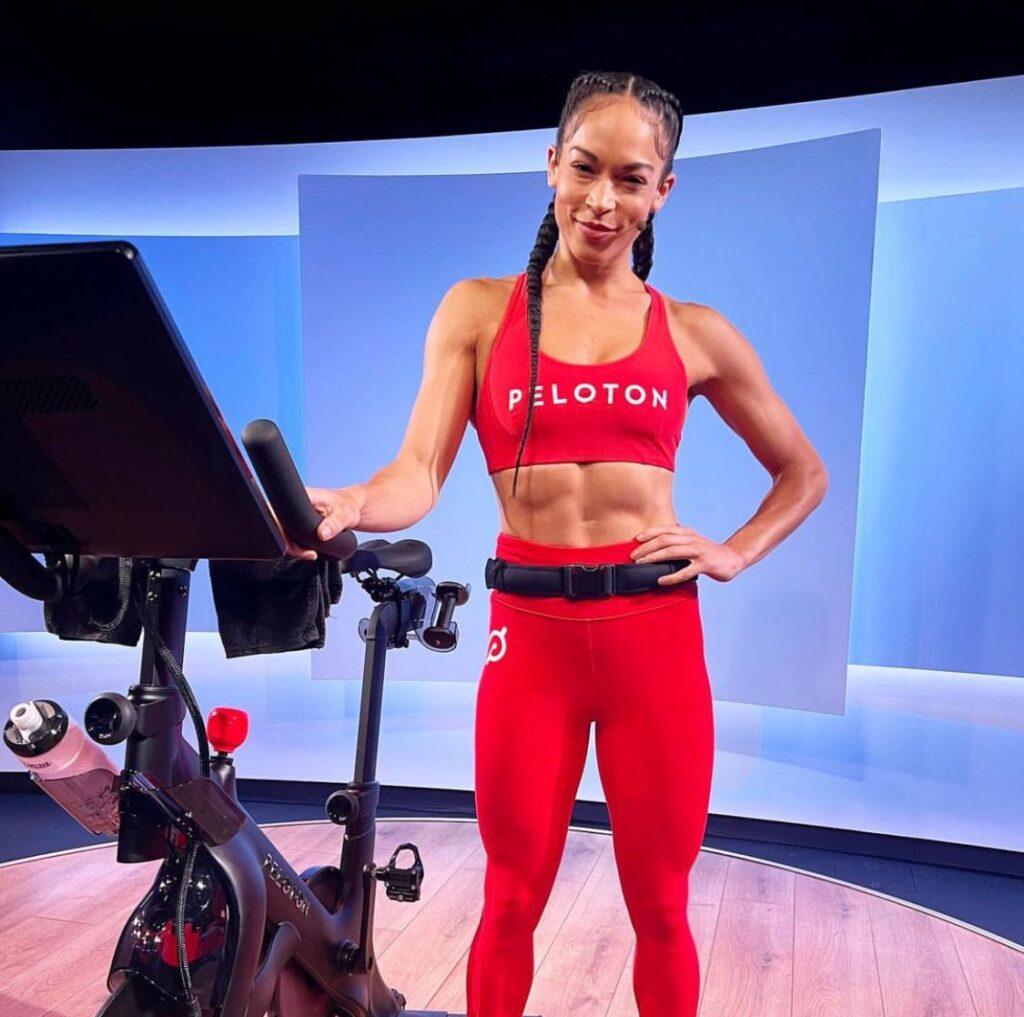
Hannah, an instructor at Peloton, opens up about her Olympic ambitions, letting go of comparison culture and why real strength has nothing to do with speed, stats or calories burned.
There was a time when Hannah Frankson was training for the Olympics.
Triple jump, track sessions, relentless discipline — from the age of 13, athletics wasn’t just something she did, it was who she was.
By 26, however, the dream that once fuelled her had begun to feel all-consuming. “It dictated everything — what I ate, what I did with my free time. What free time?” she laughs. The professional athlete mindset had sharpened her discipline, but dulled something else: joy.
And then she found spin.
Read more: Mani Cooper on the Olympic sport that still doesn’t include women
The day exercise became fun
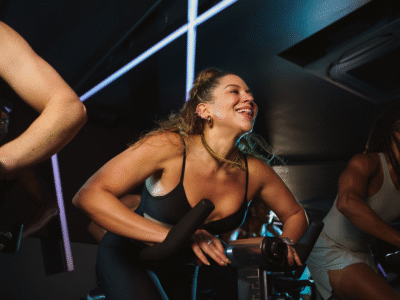
“I remember the first time I walked into a spin class,” she says. “The energy was palpable.”
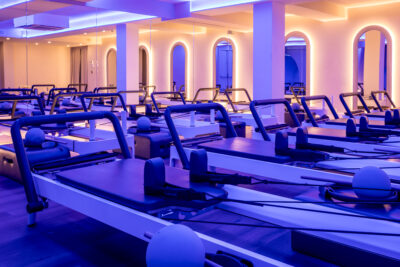
A darkened studio, music vibrating through the walls, dozens of strangers pedalling in unison. “We were all moving together. It didn’t matter how fast you were going or what resistance you were on. We were just doing it.”
For Hannah, it was a revelation: exercise didn’t have to be about punishment, perfection or podiums. It could feel electric. It could feel communal. It could feel good.
Spin, she says, is revolutionary precisely because of its connection to music. “You’re together, but you’re in your own lane. There’s no fixation on numbers. You just let go.”
And in a culture obsessed with tracking, measuring and optimising, letting go might be the most radical act of all.
That’s not to say she’s abandoned intensity. “I like that spin brings out the discipline in me,” she explains. The difference now is choice.
There are the serious sessions — the ones where you push, sweat and burn through pent-up energy. But there are also music-led classes where it’s less about output and more about embodiment. “Sometimes, it’s just about moving your body and having a good time.”
It’s fitness without the rigidity she once lived by.
How to stop comparing yourself to others
If there’s one thing a lot of women are socialised to do from an early age, it’s compare: pace, body, career and life milestones.
Hannah’s advice is to redirect that energy. “Instead of comparing yourself to others, be competitive with yourself,” she says. “Challenge yourself.”
Perspective is everything. “You might think your 5k pace is slower than someone else’s. But someone else could be looking at you wishing they could even run 5k.”
Having lived the elite athlete life, she’s blunt about what truly matters. “The older I get, the more I realise there are things that are more important than speed and metrics.”
This International Women’s Day, it feels like a timely reminder: your value isn’t a number.
Read more: Does your run need a digital detox? How Strava and RunTok are ruining running
It’s not about what you lose
Few industries push calorie fixation quite like fitness, and Hannah is on a mission to flip the narrative.
“It’s not about what you lose,” she insists. “It’s about what you gain.”
Friends, memories, joy. When movement becomes purely transactional — burn this, shrink that — we strip it of its magic. But when it becomes expansive, connective, life-affirming: that’s when it sticks.
Motivation, periods and being kinder to yourself
Hannah is refreshingly honest about off days. The first question she asks herself when motivation dips — am I unmotivated or am I on my period?
“They’re two different things,” she says. “Being on your period is a state your body is in. You need to treat yourself gently.”
It’s the kind of hormonal awareness women are rarely encouraged to honour, especially in performance spaces. But she sees it as essential.
If it’s not cycle-related, she plays detective. Did she sleep enough? Eat enough? Is stress creeping in? “Once you pinpoint the reason, you can work to resolve it.”
And if the spark still isn’t there? She simply lowers the bar. “I’ll tell myself I’ll just do five minutes. Usually, once I start, I’m fine. But if I’m not, at least I tried.”
Crucially, she rejects the idea that movement must be maximal to count. “It doesn’t have to be a 45-minute spin session. Go for a walk, do some stretching or dance around your kitchen.”
In other words: movement should make you feel better, not worse.
View this post on Instagram
Read more: Experts say this is how you should be exercising at each stage of your menstrual cycle
Redefining strength
So, what does strength mean to a woman who once trained for the Olympics?
“It’s doing the thing that’s hard. The thing that scares you. The thing you don’t want to do,” she says. “It’s too easy to do the easy thing.”
But there’s another side to it, one less visible on leaderboards.
“There’s strength in opening up. In being vulnerable. It’s OK to cry. It’s OK to admit something felt hard.”
This International Women’s Day, that might be the most powerful message of all.
Strength isn’t just in the sprint. It’s in the softness, in choosing joy over punishment, in moving your body because you can — not because you hate it.
Feature image: Peloton/Hannah Frankson