British TV personality Amanda Holden has credited the Viking Method for health, strength and fitness. We find out whether it’s just another celebrity-backed trend or a fitness regime worth following.
There’s no shortage of celebrity-endorsed training plans promising life-changing results. But when Amanda Holden shared that she follows the Viking Method to stay strong and energised in her 50s, its sparked fresh curiosity about functional, back-to-basics approaches to fitness and nutrition.
Unlike many programmes focused purely on weight loss or aesthetics, the Viking Method goes beyond just strength training and calorie counting by promoting a complete lifestyle — one actually inspired by Vikings.
Of course, most Vikings were living in harsh, physically demanding environments — not exactly comparable to modern life, and certainly not Amanda Holden’s.
So, what exactly is this viral method that’s captured so much attention, and does it live up to the hype?
View this post on Instagram
What is the Viking Method?
Popularised by Icelandic fitness influencer Svava Sigbertsdottir, the Viking Method is a fitness, training and diet plan that emphasises strength, bodyweight exercises and a clean Nordic-inspired diet.
It blends functional strength work with high-intensity intervals and full-body movement patterns such as pushing, pulling carrying and crawling.
In her book, The Viking Method: Your Nordic Fitness and Diet Plan for Warrior Strength in Mind and Body, Svava sets her approach apart from conventional fitness regimes, which tend to focus on calorie counting or appearance. Instead, the emphasises is on building robust general health, strength and resilience (though this does involve fat burning).
The method is built on three core pillars:
- Think like a Viking
- Train like a Viking
- Eat like a Viking
Each pillar is also supported by helpful mantras focused on empowerment, mental strength and internal validation.
What does the Viking Method involve?
Designed to build ‘real-world strength and resilience’, the method combines exercises in ways that ‘recruit more muscle fibres and drive up energy output’, explains Andy Carr, head of fitness at Snap Fitness UK.
Sessions are fast paced and demanding, incorporating circuits, supersets or partner work that mixes strength and cardio elements.
“It’s less about isolating muscles and more about training the body as a system, improving strength, endurance and coordination all at once,” Andy explains.
Read more: These female-founded activewear brands design exercise gear with women in mind
Workouts include structured programmes such as:
- The Hell’s Fury programme: five exercises performed in a row, with 40 seconds on and 20 seconds off for each exercise. Movements include squats, tricep extensions and deep burpees.
- The Fury programme: a more intense plan designed for fast results in a short period, combining multiple resistance sessions, a high-intensity Viking Madness workout and cardio each week, which advances in difficulty every fortnight
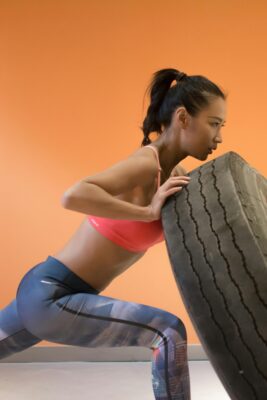
Exercises are often chosen to try and mimic real-life actions, such as farmers’ walks (carrying heavy loads), sandbag cleans and presses, tire slips and slams, burpees and push-ups.
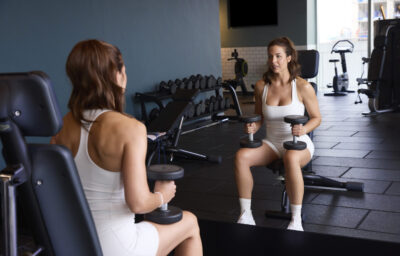
Notably, there’s less emphasis on traditional dumbbell or machine- based weightlifting, with stronger focus on functional, full-body movement. The goal is to strengthen and train the body in ways that are similar to how it moves in everyday life, rather than isolate and train muscles purely for appearance.
Who does it work well for?
The Viking Method can work well for people who enjoy variety and intensity. Because it’s functional and high effort, it can deliver improvements in overall fitness — including strength, stamina and calorie burn — in relatively short sessions.
Its particularly suited to anyone motivated by challenge who wants to feel more athletic and able in everyday life, rather than just train muscles in isolation.
The flip side is its intensity. “It’s incredibly demanding,” says Andy. “Beginners or anyone coming back from injury might find it overwhelming if it’s not properly scaled.”
Because it’s broad on focus, it may not be ideal for someone with a very specific goal such as maximal strength, bodybuilding or rehabilitation-based training.
Like anything, it needs to be programmed intelligently and with the individual in mind.
Read more: Protein powder can negatively impact women’s hormones — here’s what you need to know
Is the Viking Method suitable for women?
Andy believes the Viking Method can be a safe and effective for women. “The principles behind it, such as progressive overload, functional movement and energy system training, aren’t gender specific,” he says.
In fact, many women respond well to this style of training as it builds real-world strength, confidence and overall fitness without a punitive focus on looks.
But there’s much debate around overtraining for women, particularly with concerns that excessive intense workouts without adequate recovery can affect hormone health and even result in menstruation issues.
Hannah Joyce, founder of Flexera Reformer Pilates, has observed an “after-effect” in women who’ve adopted such high-impact regimes:
“It places a massive load on the joints and the endocrine system,” she says. “Constant high-intensity training can lead to elevated cortisol levels, which actually hinders recovery and long-term fat loss.”
For Hannah, the most effective strategy for women is a ‘hybrid’ approach. She suggests balancing out the Viking Method with supplementary exercise that builds the same functional strength and lean muscle definition but with less impact, such as reformer Pilates.
“This protects the joints and balances the nervous system, ensuring that when you do want to push yourself with a Viking-style workout, your body has the structural integrity and core stability to do it safely,” she adds.
Read more: Georgia Heins on her ‘game-changing’ hand/food portion method that can transform your body

What about nutrition and hormones?
Alongside training, the Viking Method includes detailed guidance on eating and nutrition, which focuses heavily on hormone health.
For example, Svava recommends prioritising protein and fat in the 90 minutes before a workout, while limiting sugar and carbs.
She also advises against relying on quick, accessible sugars, such as those found in a banana, before a workout, because these can activate a fat-storing hormone and deactivate the fat-burning ones.
Dejon Noel-Williams, fitness expert and founder of Vibe Tribe praises the method for women: “It links training and nutrition to hormone balance by managing things like energy levels and insulin response, which can help support fat loss, hormone balance and overall wellbeing.”
The approach prioritises strategic fuelling and mindful eating, which he believes makes it easier to maintain in the long term. “Focusing on simple, whole foods helps fuel performance and recovery, rather than relying on restrictive dieting — which can reduce cravings and make the plan easier to stick to.”
Feature image: Pexels