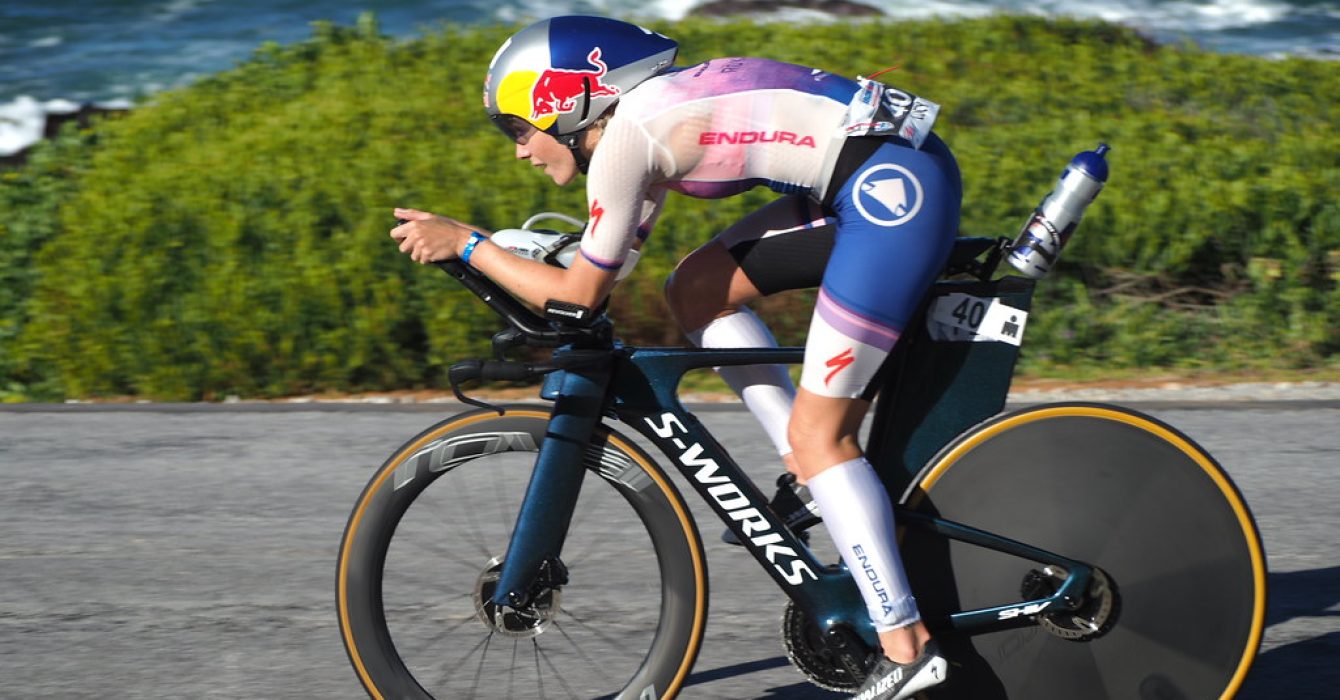
Now one of Britain’s most recognisable endurance athletes, Lucy Charles-Barclay has triumphed in her passion, winning several titles in triathlon. Here, she shares what keeps her going in a male-dominated sport.
Lucy Charles-Barclay may now be one of Britain’s most recognisable endurance athletes, but her career didn’t begin with much acclaim.
At the age of 11, Lucy had already set her sights on the London 2012 Summer Olympics. Swimming was her world, and competing on home soil would be a dream come true. So, when she narrowly missed qualification, the blow was profound.
Not prepared to give up, she kept training, clocking personal bests and pushing her limits. Over time, however, her passion faded, and she stepped away from elite sport altogether.
But the break proved illuminating: “I realised how much I missed the drive and dedication that training gave me.”
In search of a new challenge, Lucy signed up for her first Ironman with her now husband, Reece. Despite having competed internationally for GB swimming, crossing her first Ironman finish line brought an elation like no other: “From that moment, I was completely hooked.”
She’s since claimed three world champion titles in triathlon and set an Ironman course record.
View this post on Instagram
Mental resilience and pressure in triathlon
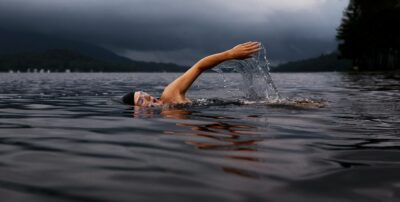
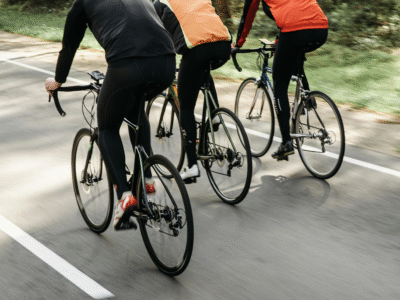
To the uninitiated, a sport combining a 3.8km swim, 180km bike ride and a marathon run may sound onerous, but for those drawn to it, that difficulty is precisely its appeal. Success demands immense aerobic capability, tactical intelligence and psychological stamina — focusing on the finish line is all you can do to push through pain and fatigue.
How does Lucy push through? Reflection, she says, is everything. Before major races, she writes down four of five of the hardest training sessions she’s completed recently. “During tough moments in a race, it helps to remind me that this is exactly what I’ve been preparing for.”
In a sport where attrition is unavoidable, mental resilience isn’t optional. Lucy uses things like music and platforms such as Zwift to stay engaged. More importantly, however, has been reframing how she views nerves. “Pressure is a privilege,” she says. “It means you care deeply about what you’re doing and you’ve earned the opportunity to compete.”
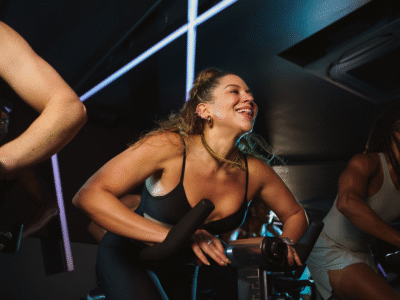
Though races take place outdoors, much of the work happens inside, explains Lucy. To replicate race conditions and reduce uncertainty on competition day, she trains using the Wahoo KICKR system, with her race bike set up exactly as it would be outside, and the Wahoo KICKR RUN treadmill for interval sessions.
Read more: “They need to know there is a future”: Mani Cooper on the Olympic sport that still doesn’t include women
Finding her purpose
While Lucy has always been driven, there have been moments of doubt. “Sport initially felt like a selfish pursuit because I was doing it for myself,” she admits. But over time, she’s found it serves a greater purpose, too. “Being able to share my journey online and inspire other women to get into the sport has made it feel bigger.”
Her pre-race ritual of braiding her hair has even sparked a movement — ‘Battle Braids’ — with women now adopting this style for their first races as a symbol of self-belief and camaraderie.
Women empowering women in sport
Though Lucy’s achievements are staggering, she’s still troubled by the fact triathlon remains a male-dominated sport.
Progress is visible, but she’s clear about the importance of representation, recalling feeling inspired as a young girl by athletes such as Chrissie Wellington, Rebecca Adlington and Laura Kenny. “Seeing them achieve so much makes you realise it’s possible for you, too.”
Equally powerful, she says, are the everyday moments: being cheered on by fellow competitors, watching rivals become allies. “Moments like these truly embody what women’s empowerment looks like in sport.”
Read more: Spurs footballer Molly Bartrip: “Anorexia nearly destroyed me”
View this post on Instagram
The future of women’s triathlon
For young girls and women considering triathlon — or any sport — her advice is simple yet impassioned: “Go after what you want and worry less about outside opinion.” She remembers when she was young and determined to reach the Olympics, and felt many people doubted her. “Believing in yourself matters more than external validation.”
Social media and scrutiny can amplify pressure, she admits, but she emphasises the importance of staying focused on your own goals. And the best way to do this? Make sport social and supportive. “Bring friends along,” she says. “The more fun you have, the further you’ll go. Consistency will follow.”
Feature image: IRONMAN Championship South Africa 2019, Nelson Mandala Bay. Picture: Flickr/ Marcin Klimczak