As Evelyn Richards trains for her first-ever marathon, she tests two leading fitness watches to determine which is best for tracking.
There’s a certain comfort in brand loyalty, especially when it comes to tech. For the past five years, my Apple Watch has been a constant: slick, intuitive and effortlessly synced with every other device in my life.
But training for a marathon has a way of sharpening your perspective. Metrics that once felt like ‘enough’, such as pace and calories, suddenly felt surface-level. I wanted more nuance, insight and understanding of what was actually happening inside my body. Metrics that serious runners swear by like cadence, recovery and VO₂ max were a blind spot, and I couldn’t help but feel like I was doing my training a disservice.
So, I did what any curious (and slightly obsessive) runner would do: I brought in a rival.
Enter the Garmin Vivoactive 6 — a brand long revered in performance circles, known for its data-rich approach to training. The Vivoactive range in particular is heralded as one of the best for runners.
Torn between the two brands? Here’s how the watches compared when I wore them both for a half marathon.
Read more: Does your run need a digital detox? How Strava and RunTok are ruining running
Price comparison
The costs of the watches are fairly comparable, with model variations coming in at similar price points.
Unlike the Oura ring, neither fitness tracker requires a monthly subscription.
- Garmin Vivoactive 6: £269.99
- Apple Watch Series 9: from around £219 (refurbished)
While Apple has since released newer iterations (including the Series 10 and 11), their core health and fitness tracking capabilities remain broadly consistent with the Series 9 — meaning you’re not sacrificing key data points by opting for an older, more affordable model.
Read more: “I’m running my first marathon — why are there no training plans with menstrual cycle syncing?”
Setting up
Apple’s ecosystem remains its greatest strength. From box to wrist, the process is frictionless — a quick Bluetooth pairing and you’re ready to move.
Garmin, by contrast, requires a little more patience. Multiple apps, software updates and a less streamlined interface make the onboarding feel comparatively clunky. Not a dealbreaker, but noticeable.
Battery life
If there’s one category that decisively separates the two, it’s this.
- Garmin Vivoactive 6: up to 11 days (around five with always-on display)
- Apple Watch Series 9: typically requires daily charging
In practice, this transforms how you use the device. Garmin becomes something you wear continuously — capturing sleep, recovery and daily strain without interruption. Apple, while powerful, demands routine charging, which inevitably creates gaps.
For anyone serious about holistic tracking, that continuity matters.
Fitness tracking
At a glance, both devices deliver what most users expect: accurate tracking of runs, walks and workouts, complete with heart rate, pace, distance and route mapping.
But look closer, and the philosophies diverge.
Garmin leans into performance. Its ecosystem is built around understanding your body — offering metrics like Body Battery, recovery insights and detailed breakdowns of effort and readiness. It doesn’t just tell you what you did; it suggests what you should do next.
Apple, meanwhile, prioritises clarity and accessibility. The data is clean, digestible and immediate, but less layered. Advanced metrics often require third-party apps, fragmenting the experience.
That said, Apple shines in one small but surprisingly impactful way: speed. Workouts sync almost instantly to platforms like Strava, feeding into that post-run ritual of analysing and sharing. Garmin’s delay, sometimes up to half an hour, feels more noticeable than it should.
Read more: The best free running clubs in London to join in 2026
Smart features
Beyond fitness, the Apple Watch remains in a league of its own. With a vast app ecosystem, seamless notifications and optional cellular connectivity, it functions as a true smartwatch, not just a fitness companion. It integrates effortlessly into daily life in a way Garmin doesn’t quite replicate.
Garmin covers essentials well, but its interface and app experience feel more functional than refined.
Design
Style is, of course, subjective — but the distinction is clear.
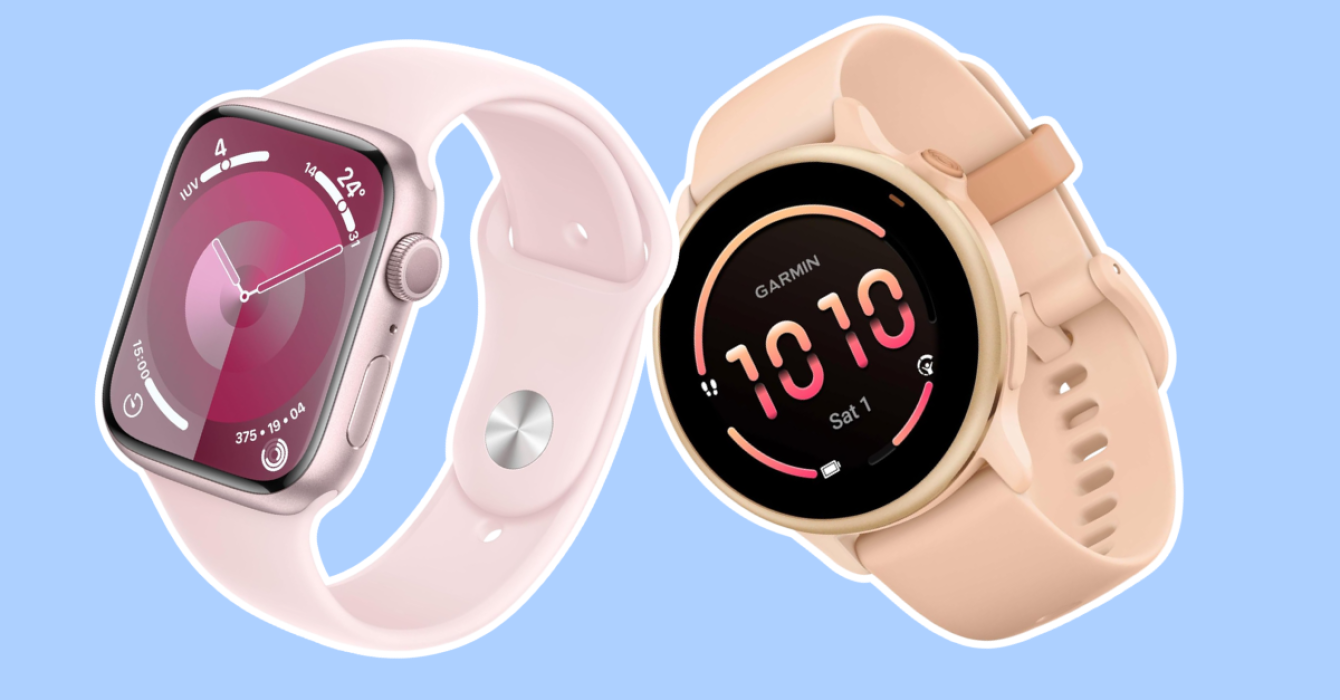
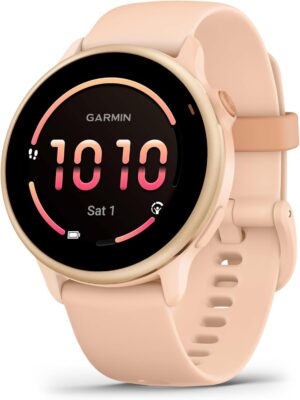
Garmin’s round watch is chunkier than Apple’s, with a thick black bezel around the screen. The strap is very sport-focused and isn’t interchangeable. I opted for the pink colour thinking it would be cute and girly, but the tone feels flesh-like.
The display itself is more customisable, allowing you to choose how many metrics you want to see at a glance. However, the design is noticeably dated, feeling clunky and a little ugly by comparison.
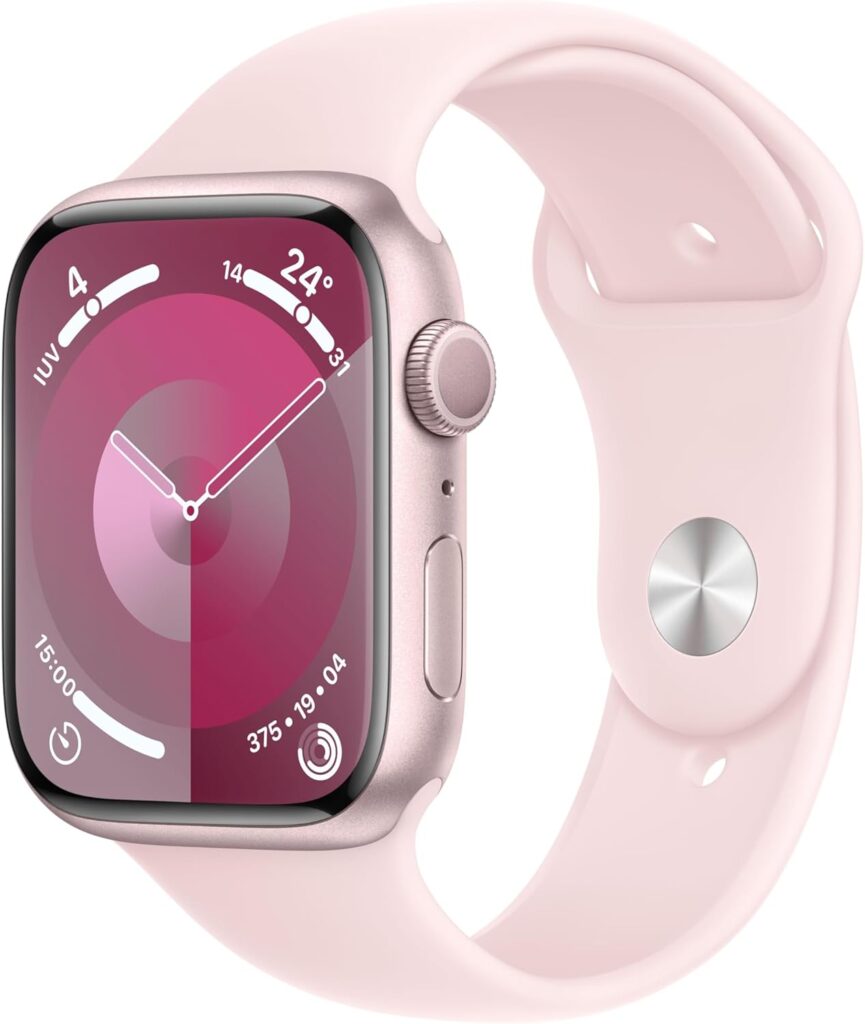
Apple, as we’ve come to expect of its other products, is sleek and stylish. There are countless watch straps to choose from, official and off-brand, which range from sporty silicone to more formal leather and metal. This means it’s not just a watch for sport; switch out the strap and suddenly you can wear it to work, parties and weddings.
The screen is crisp and clear, with modern images, text and graphics. No bezel either — the bright screen reaches the edges of the rounded-square watch face.
The Garmin feels purpose-built for training; the Apple Watch feels designed for life. From interchangeable straps to its premium finish, Apple leans into versatility — a device that transitions as easily from workout to dinner as you do.
Compatibility
- Garmin Vivoactive 6: compatible with iOS and Android
- Apple Watch: iPhone only
For non-iPhone users, the decision is effectively made for you.
I ran a half marathon wearing both watches — here’s how they compared
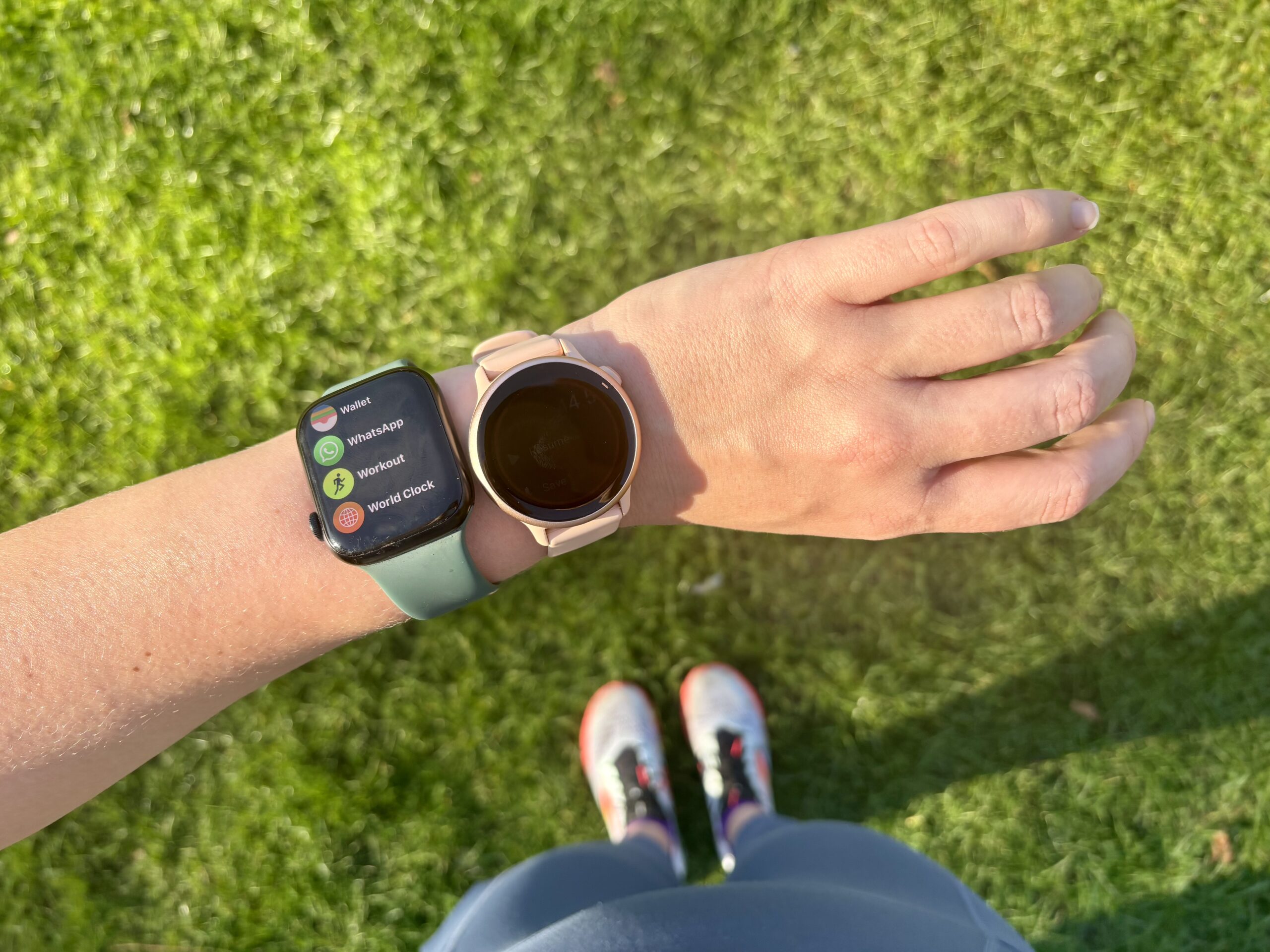
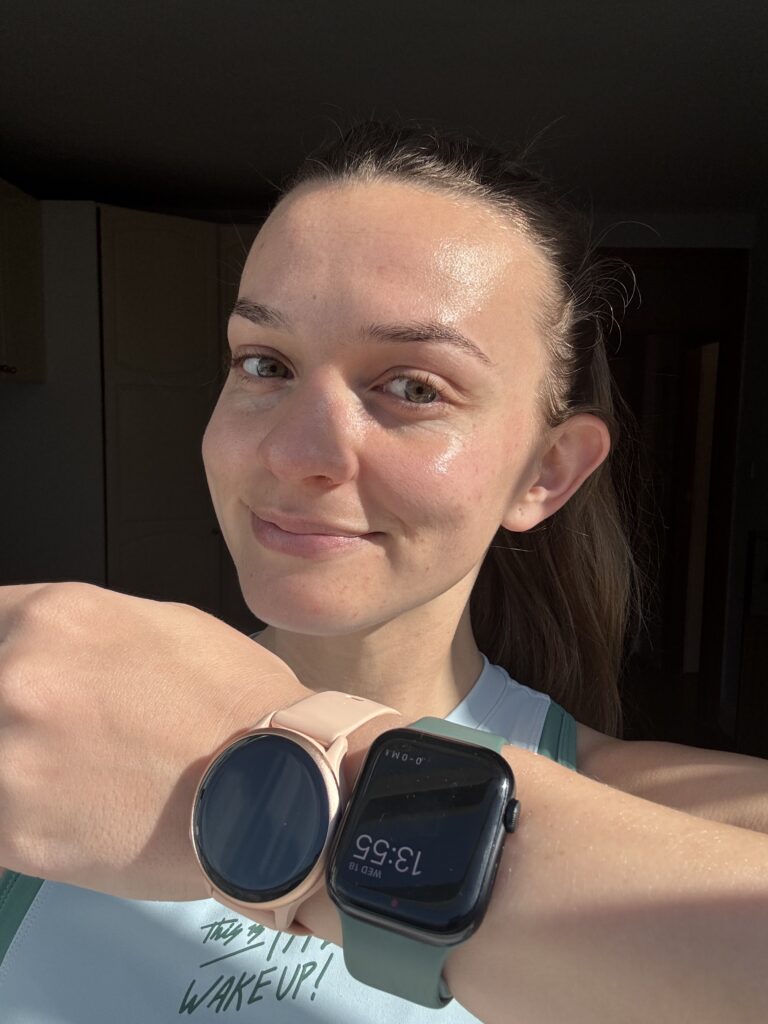
To properly put both devices through their paces, I strapped the Apple Watch Series 9 to my left wrist and the Garmin Vivoactive 6 to my right, heading out on a 13.1-mile run.
On the run:
It was a bright, sunny day and Apple’s display immediately stood out: brighter, sharper and noticeably easier to read mid-stride.
Garmin, however, takes a more stripped-back approach. Its interface prioritises only the essentials, meaning you can glance down and get exactly what you need without distraction.
Both watches had auto-pause enabled, but Apple proved far more responsive, stopping almost instantly when I did. Garmin lagged slightly behind, which may have skewed its average pace marginally.
That said, Apple wasn’t without fault. Mid-run, I accidentally ended my workout altogether — the exit button is large, prominent and arguably too easy to press when you’re in motion. It’s a small design flaw, but a frustrating one, especially during longer efforts. A confirmation step here would make a significant difference.
The data:
Apple Watch Series 9
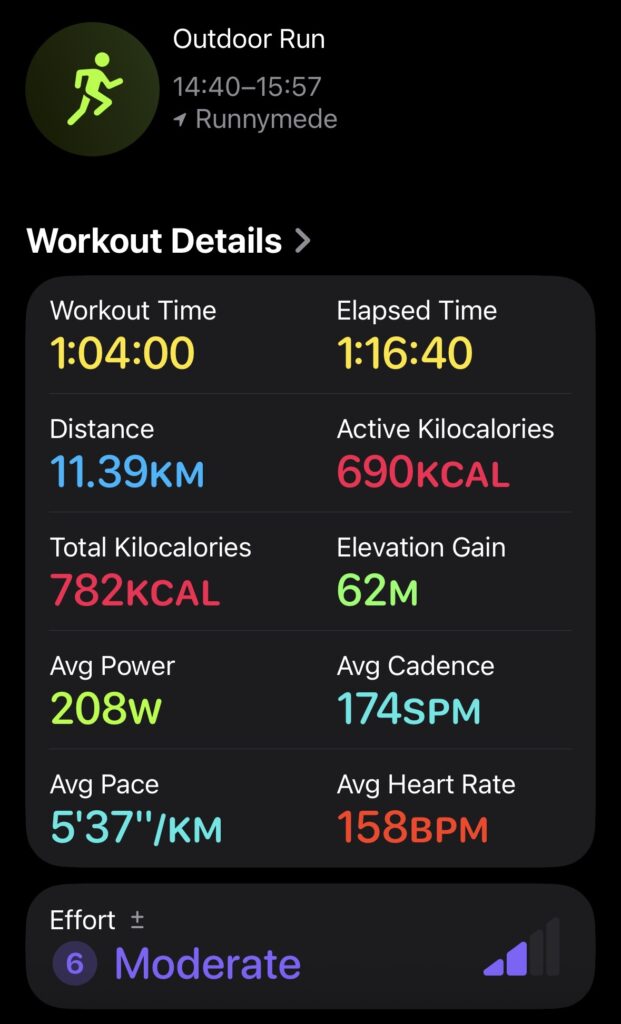
Apple’s post-run summary is, at first glance, beautifully presented. The Fitness app delivers clean visuals and neatly packaged stats, including cadence and running power.
But dig a little deeper, and things become less intuitive. You’re presented with a series of graphs and figures, but with very little context. What does an average power of 203 watts actually mean? Is a cadence of 174 steps per minute optimal, or something to improve?
Crucially, there’s also no clear breakdown of heart rate zones or effort levels — a cornerstone for many training plans. To access that level of insight, you’re pushed towards third-party platforms like Strava, fragmenting what could otherwise be a seamless experience.
Garmin Vivoactive 6
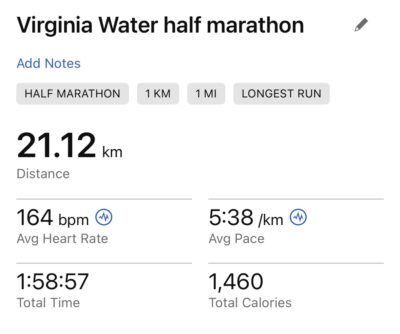
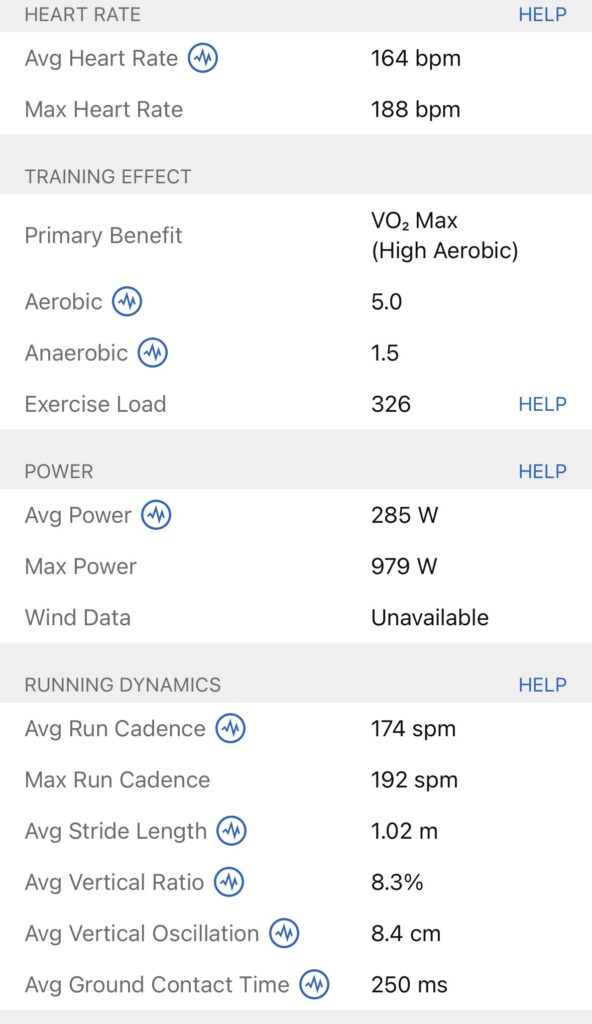
Garmin, admittedly, makes you wait. My run took around 30 minutes to fully sync to the Connect app — but once it did, the depth of data was on another level.
Beyond the basics, Garmin offers a comprehensive suite of advanced metrics: maximum cadence, stride length, vertical oscillation, ground contact time and more. It’s a lot, and not all of it immediately intuitive.
However, each metric comes with a built-in explanation, accessible at a tap, and can be explored further through detailed charts. It transforms what could feel overwhelming into something genuinely useful — especially if you’re working towards specific performance goals.
And then there are the small, standout features. Garmin estimates sweat loss, offering guidance on how much to rehydrate post-run — and, crucially, how much fluid you might need to carry next time. It’s practical, actionable insight that extends beyond the screen and into real-world performance.
Apple Watch vs Garmin: which one should you choose?
Choosing between the Apple Watch Series 9 and Garmin Vivoactive 6 isn’t about which is ‘better’ — it’s about what you want from your training.
If you’re looking for a smartwatch that blends effortlessly into your daily life, one that looks as good at brunch as it does on a run, syncs seamlessly with your devices and delivers your stats in a clean, digestible way, then the Apple Watch remains a polished, intuitive choice.
But if your focus has shifted from simply moving to actively improving, Garmin starts to pull ahead. Its strength lies not just in what it tracks, but in how it translates that data into something meaningful — something you can actually use to train smarter, recover better and push further.
Buy the Garmin Vivoactive 6 from Garmin.
Buy the Apple Watch Series 9 from Amazon.
Feature image: Apple/Garmin