Your go-to toothpaste may contain detectable trace amounts of heavy metals. Experts advise what ingredients to look out for and which products to buy instead.
Until not so long ago, toothpaste shopping was an easy errand. Just head to your nearest shop or supermarket, pick up your favourite option, and be on your merry way.
But concerns about heavy metal contamination have prompted consumers to take a closer look at what’s in their everyday products.
In 2025, consumer advocacy organisation Lead Safe Mama commissioned an independent laboratory to test 51 popular toothpaste brands. The results found that 90% contained detectable levels of lead, 65% arsenic, 47% mercury and 35% cadmium. Only a small number of products tested showed no detectable levels of any of the four metals.
While these findings have not yet been replicated in peer-reviewed scientific studies, the presence of a detectable heavy metal in everyday products might ring alarm bells.
Why is lead in toothpaste bad for you?
Although the amounts detected were minimal, health experts agree that exposure to lead over time is a concern, especially for children.
“The concern with heavy metals is that they can accumulate in the body,” explains Dr Rhona Eskander, founder of Chelsea Dental Clinic. “Lead is the clearest example: there’s no level of exposure considered beneficial, and children are particularly vulnerable because their brains and nervous systems are still developing.”
Long-term exposure at high levels has been linked to learning disabilities, developmental delays, behavioural problems and even Parkinson’s disease, as well as kidney and cardiovascular problems, says Dr Rhona.
“Arsenic, cadmium and mercury carry similar long-term risks, including kidney and nervous system damage and, with significant exposure, can cause an increased cancer risk,” she says.
But context matters here. Toothpaste isn’t likely to be most people’s main source of heavy metal exposure, and levels in mainstream products are generally low, says Dr Rhona. “But because it’s a twice-daily habit started in early childhood, and because young children swallow some toothpaste while brushing, it’s reasonable for people to want those levels kept as low as possible, and for that bar to keep getting tighter as testing improves.”
Do industry regulations not prevent the presence of harmful ingredients?
It’s complicated, because the presence of heavy metals in toothpaste doesn’t necessarily mean manufacturers are breaking safety rules.
“Heavy metals such as lead aren’t deliberately added to toothpaste,” says Dr Hanna Kinsella, dental professional and founder of Icy Bear Dental and Kiln Lane Clinic. “They’re usually present in trace amounts through raw materials, the manufacturing process or, occasionally, packaging.”
Many toothpaste ingredients are sourced from naturally occurring minerals, which come from the earth, and so can contain tiny amounts of heavy metals unless they undergo extensive purification.
“Regulators set limits on what’s considered safe, and manufacturers are required to test products and ensure they stay well within those limits,” says Dr Hanna.
In other words, the issue isn’t a lack of regulations but rather trace contaminations that may not be being managed well enough through sourcing, purification and quality control.
Dr Hannah recommends choosing brands that are transparent about their ingredients, testing procedures and manufacturing standards.
Read more: Deodorant vs antiperspirant: how to find a safe underarm deodorant
View this post on Instagram
Ingredients to watch out for on labels
According to Lead Safe Mama, contamination is more likely when toothpaste contains mineral-derived ingredients such as:
- Hydroxyapatite (especially nano-hydroxyapatite)
- Bentonite clay
- Calcium carbonate
- Some naturally mined mineral powders
Dr Hannah also advises caution with highly abrasive ingredients such as activated charcoal, which may wear down enamel over time.
These ingredients aren’t inherently unsafe, but because they originate from geological sources, they may carry trace heavy metals unless carefully refined and tested.
Ingredients you don’t need to avoid
Labels can be long and difficult to decipher, especially when ingredients sound similar.
If the label feels overwhelming, don’t panic. These are common toothpaste ingredients that are not currently considered significant sources of heavy metal exposure:
- Fluoride (sodium fluoride or stannous fluoride)
- Glycerin
- Sorbitol
- Hydrated silica (while some investigators have suggested mineral sourcing may matter, evidence is limited)
- Xylitol
- Sodium lauryl sulfate (SLS)
Read more: Your handbag could be dirtier than you think. Here’s how often you should be cleaning it
Which toothpaste brands are considered safe and lead-free?
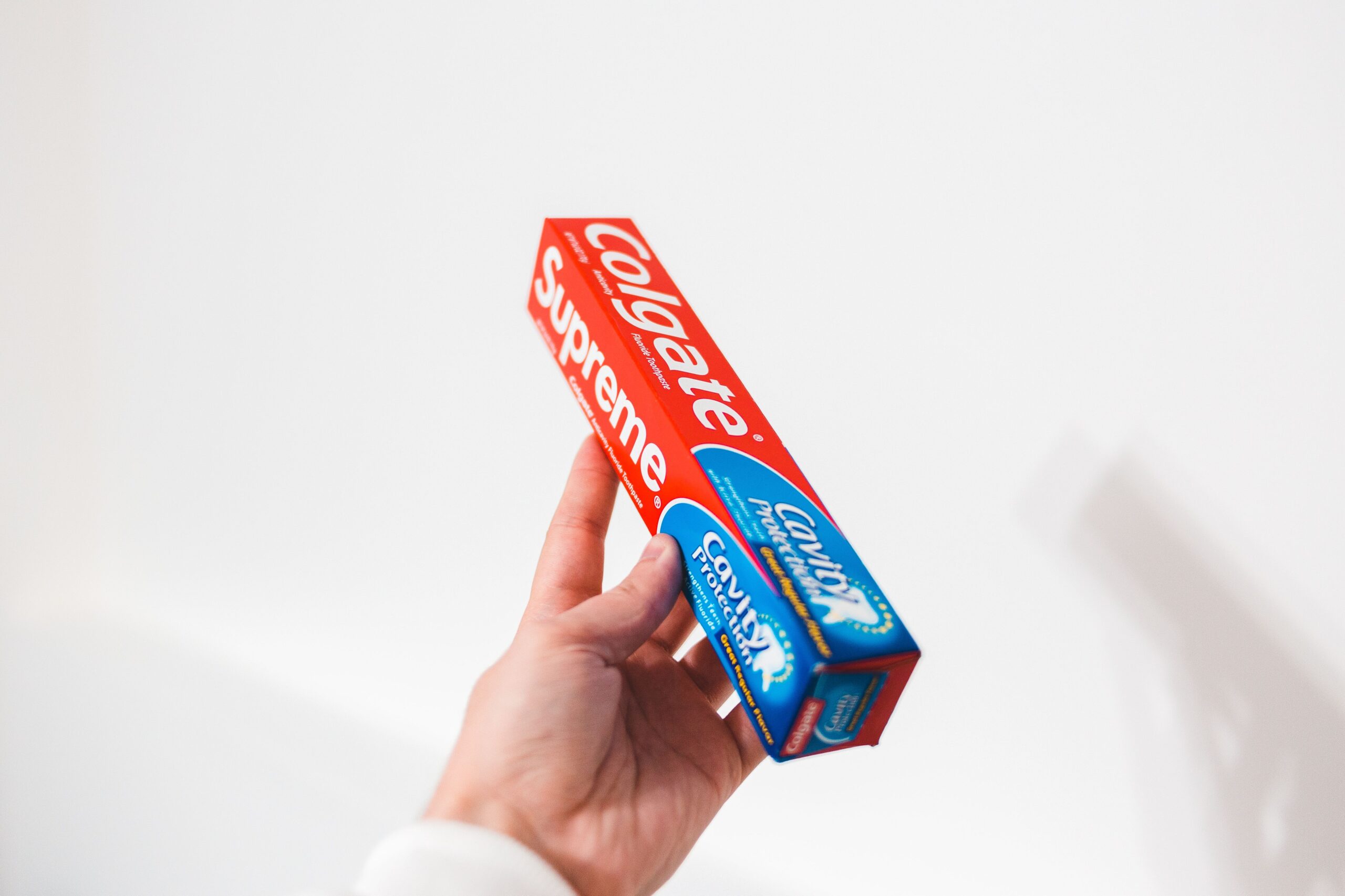
Lead Safe Mama’s original test in 2025 identified five toothpaste products with non-detectable levels of lead, arsenic, cadmium and mercury.
By early 2026, after testing more products, the list was expanded to eight.
One important caveat is that Lead Safe Mama’s testing is batch-specific, meaning there’s no guarantee that every future batch will have identical results — although some products have undertone repeat testing over time.
Products reported as having non-detectable levels of all four metals include:
- Oral-B Pro-Expert Professional Protection (UK version), £2.50
- Brown’s Fluoride-Free Baby Toothpaste (strawberry flavour), £9
- Aquafresh Fresh & Minty Fluoride Toothpaste (UK version only, purchased in London (made in the UK or Slovakia, not the U.S. version), £1.99
- Weleda Salt Toothpaste (fluoride-free), £5.95
Feature image: Pexels