As she trains for her first-ever marathon, Living360’s Evelyn Richards reflects on the dark, sometimes toxic side of online running communities.
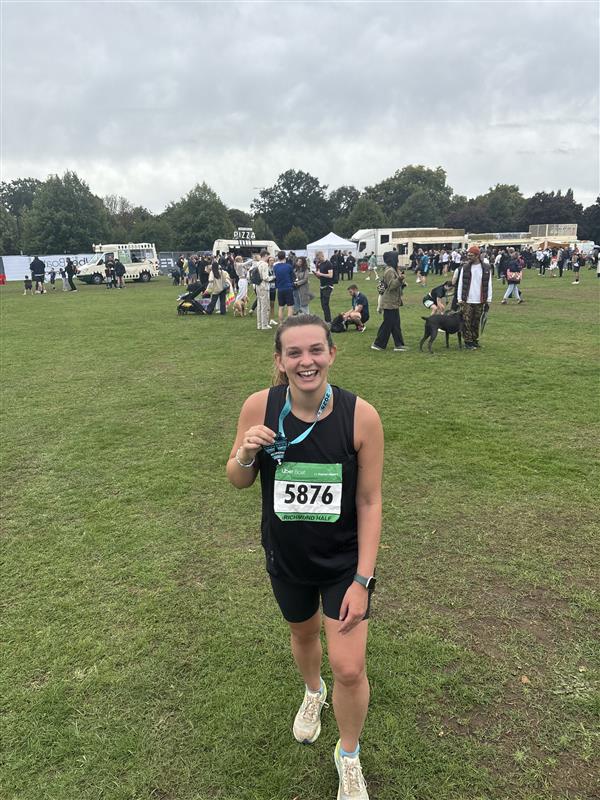
One recent weekend, I ran over 10 miles on Saturday and followed it with a half marathon on Sunday. I knew, in the rational corner of my brain, that this wasn’t how marathon training should unfold — especially three months out. I’m well aware of the risks of stress fractures and tendonitis, cortisol spikes and cumulative fatigue. And yet, I laced up again.
Last year, a friend’s boyfriend added me on Strava, and a few days later exclaimed, “You’re just so fast.” It was meant as a compliment, of course, but an awful realisation has haunted me ever since. People are watching — not just blindly handing out kudos, but forming opinions about my pace, my distance, my discipline.
I have a private account with fewer than 20 followers, but something about him commenting on my performance in a real-life conversation shook something in me, and it altered my training. Since then, I’ve found it hard to run easy — even when the plan insists easy is the point.
Running influencer Emily (@runswithemily) understands that tension.
“It took me a long time to unlearn that working out doesn’t have to mean being out of puff,” she tells me. “Easy runs count. You have to let go of the embarrassment about having a slower pace or it becomes overwhelming.”
In theory, I know this. Easy runs build aerobic capacity, they protect connective tissue and they’re essentially the scaffolding beneath endurance.
But in practice, I check my watch too often and I push myself every time. When with slower friends, I’m embarrassed to admit that I always clarify in the caption on Strava: “with XX”. A disclaimer, so no one mistakes the pace for my own.
This is the quiet theatre of the modern amateur athlete: performing for an audience we insist we don’t care about.
Read more: The best free running clubs in London to join in 2026
Strava anxiety and the psychology of public running metrics
Strava now has roughly 180 million users worldwide. It’s a diary, leaderboard and social network in one. The company previously removed around 3.5 million activities after uncovering widespread cheating — e-bikes logged as pedal rides, ‘runs’ recorded from inside cars. Even recreational runners, it seems, are susceptible to the pressures of public metrics.
Dr Lori Bohn, a board-certified psychiatric-mental health nurse practitioner, says the psychology is predictable. “People start comparing themselves to others’ paces and distances,” she explains. “These platforms highlight successes, so runners measure themselves against a curated standard.”
Comparison, however, thrives in echo chambers.
“When I first started posting,” says Emily, “the only people online were proper athletes who ran incredibly fast. There wasn’t anyone like me.”
After a difficult half marathon in 2019, it took Emily years to fall back in love with running. When she began documenting her training more consistently in 2023, she did so self-deprecatingly — joking about being slow, about struggling.
“People really identified,” she says. “You realise slower runners are actually the majority rather than the minority.”
And yet, even Emily has noticed the culture intensifying. “Now, it feels like there are rights and wrongs — you need to wear this, you need to look like that. That’s the side of it that makes me feel overwhelmed.”
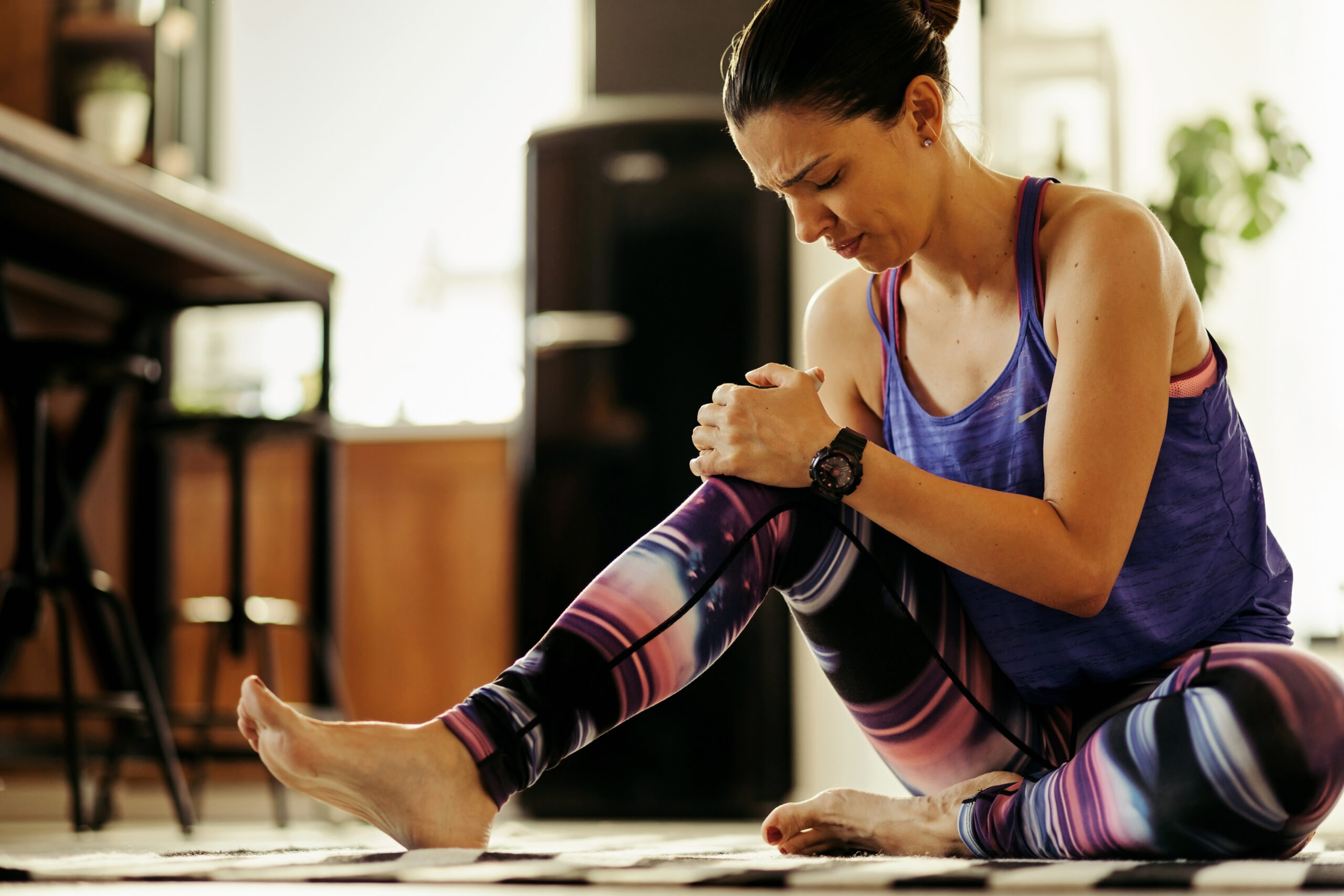
Overwhelm, Dr Bohn notes, often leads runners to override their bodies. “When someone is constantly trying to keep up with what others are doing online, they may ignore physical warning signs. That’s when you see fatigue, injury and burnout.”
View this post on Instagram
Read more: Not building muscle? Experts reveal the common mistakes you’re making
RunTok and overtraining
The performance instinct has only sharpened in the age of TikTok, where the running subculture known as RunTok packages marathon training into 10-30 second montages of sunrise miles, ice baths and negative splits.
Recently, that aesthetic has collided with reality. Influencers including Mary McCarthy and Lucy Davis have publicly shared stress fractures and forced breaks, igniting widespread discourse about overtraining and whether content culture rewards excess.
Emily approaches the topic with nuance. “Influencers have some responsibility,” she says. “They do have real-world influence. But viewers also must take what they see with a pinch of salt. Creators can’t show everything — that wouldn’t make good content.”
She is wary, too, of the online backlash that follows injury announcements. “It becomes a bit of a toxic witch hunt. We don’t know what caused someone’s injury and people jump to conclusions about their health. We shouldn’t assume anything.”
The algorithm may reward spectacle, but injury is rarely simple.

Read more: Understanding injury risks across your cycle
The physiology of ego
David Zhong, a kinesiologist and personal trainer, sees the consequences in clinic rooms rather than comment sections. “I see recreational runners put their mental health at the mercy of digital validation every week,” he says. “Sessions turn into therapy when someone feels like a failure because their pace dropped on a recovery day.”
Endurance performance is built primarily at low intensity. Progress occurs during aerobic development and rest — not daily personal bests. Running easy but just fast enough to look respectable online can erode resilience.
“You may feel like you’re winning the social media game,” David says, “but your tendons pay for it.”
Emily’s workaround is deceptively simple: change the metric. “Instead of obsessing over distance or speed, focus on time,” she says. “Tell yourself you’re running for 40 minutes. It doesn’t matter how fast.”
It’s a reframing that strips the performance out of the pace.
Read more: ‘I’ve run the UK’s hilliest parkrun six times — these are my incline training tips’
The online echo chamber
Though I follow only a handful of people on Strava, a pattern emerges when I widen the lens.
One friend is a running-club ambassador, perpetually photographed at branded track nights. My Hong Kong–based aunt summits mountains daily with her dogs, her elevation gain resembling a minor alpine expedition. My mum — who’s completed nearly 50 marathons — logs yet another punishing long run with unnerving steadiness. Scattered among them are several fleet-footed friends for whom a sub-45-minute 10K appears effortless.
The more I scrolled, the more I realised that platforms like Strava don’t simply reflect running culture, they refract it. The people most likely to download a fitness tracking app are those already committed to training.
I’ve been repeatedly startled to discover that some non-running friends have never heard of Strava at all. To them, running is just an occasional act, not an identity.
When the most visible runners online are also the most dedicated, ‘normal’ begins to drift. A 15km midweek run appears standard, weekly mileage creeps upward, elevation charts grow serrated and the baseline shifts.
Emily believes that this is slowly correcting. “Now there are so many more creators showing realistic training,” she says. “That’s been really positive.”
@jennyyyy_fit Runtok comments be like: I saw a lady called @Lily do this and it make me lol so I had to make my own version ⭐ #runtok #running #runna #longrun #londonrunclub
Read more: As Arsenal Women make history again, here’s why women thrive in team sport
Reclaiming running before marathon day
As race day approaches, I’m trying to recalibrate what success looks like. Less obsession with pace, more focus on distance. Less scrutiny of splits, more attention to durability.
That might mean exploring the quieter corners of Strava’s privacy settings — hiding pace, muting segments, shrinking the audience. It might mean curating my feed more intentionally, following creators like Emily who make space for slower miles and honest conversations.
Emily’s recommendations include Celina Stephenson (@celinastephens0n) and Jenny Mannion (@jennyyyy_fit) for their authenticity, transparency and dedication to inclusivity. Also, Scottee (@scotteeisfat) for his realistic and humorous approach to running influencing.
And if I can quiet the nagging need for speed, perhaps I can remember why I started running in the first place — not for the algorithm, not for the kudos, but for the personal achievement.
Feature image: Canva/Strava/TikTok